
2024 Good Food Award Finalist
The Good Food Awards announced Ethiopia Guji Kayon Mountain Farm is a finalist for the 2024 Good Food Awards!
The nominated coffee hails from the Guji region in Ethiopia, renowned for producing some of the world's most distinctive and sought-after coffees. Our ongoing partnership with Kayon Mountain Farm began in 2018 with our first GFA!
While determining the finalists 25 finalists for this year, judges looked for sweet, clean, well-developed body, balanced acidity and phenomenal aromatics. To qualify for entry, roasters and coffee farmers must emphasize fairness and transparency from seed to cup. Acknowledging the difficulties of verifying farm-level sustainability efforts across continents, the Good Food Foundation turns to third-party certification bodies for assistance in identifying beans eligible for consideration.
Kayon Mountain Farm covers 300 hectares within a 500-hectare expanse, the farm is managed by Ismael Hassen Aredo and his family, with the support of 25 full-time staff and over 300 seasonal workers. The Guji region, known for its dense forests in southern Ethiopia, is celebrated for its distinctive coffee cultivation. Kayon Mountain Farm benefits from the region's elevated altitudes and nutrient-rich red soil.

We're 2022 Good Food Award Winners!!
The Good Food Awards announced this week that our Panama Bambito Estate Typica is a 2022 Good Food Award winner! This is one of our favorite coffees from this year because of its wonderful balance of complexity and approachability.
We are so excited that Noble Coyote Coffee Roasters has been chosen as a national Good Food Award winner for 2022! We share this honor with Priscilla Gonzalez and her wonderful Panama Bambito Estate Typica.
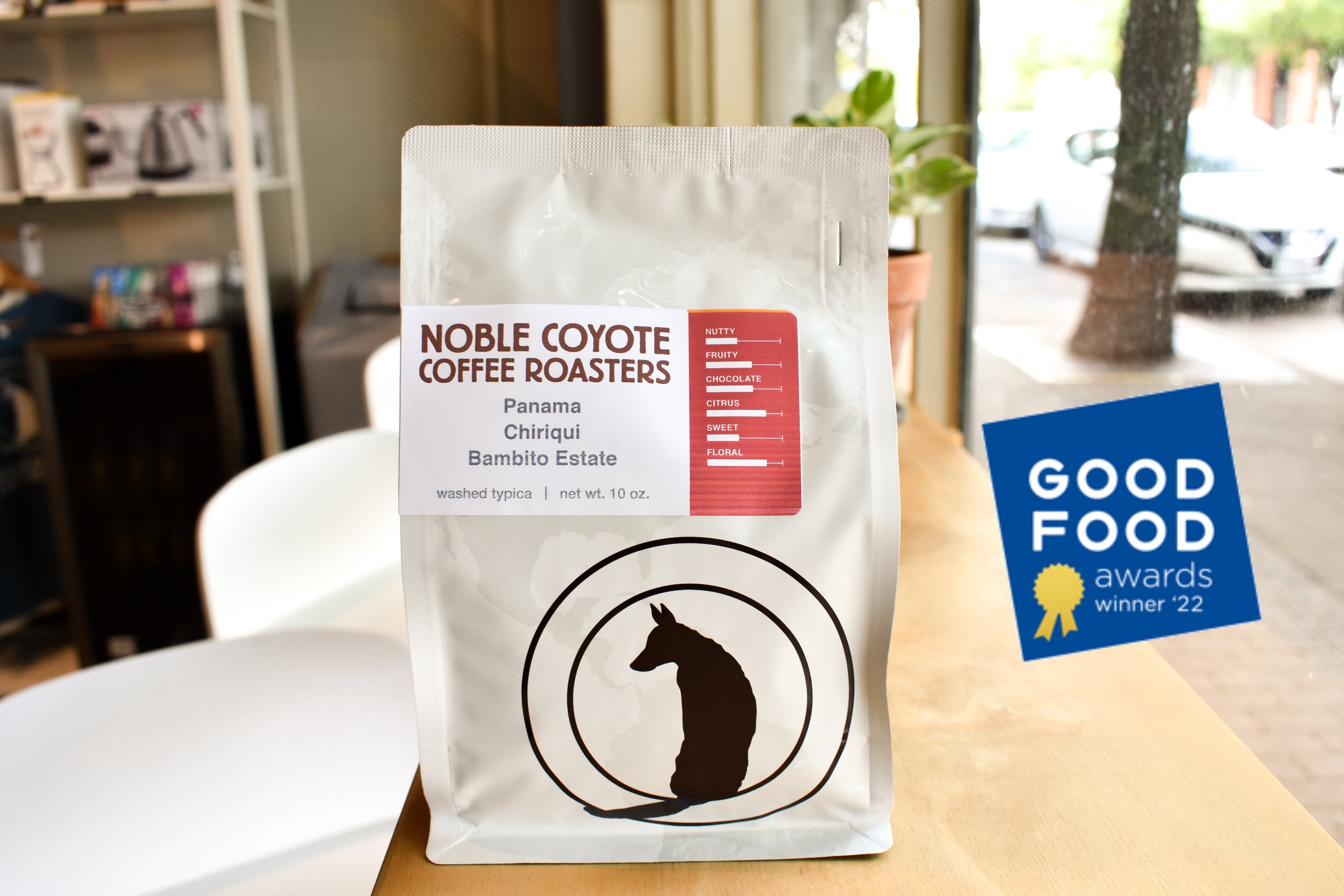
The Good Food Awards announced this week that our Panama Bambito Estate Typica is a 2022 Good Food Award winner! This is one of our favorite coffees from this year because of its wonderful balance of complexity and approachability.
We are so excited that Noble Coyote Coffee Roasters has been chosen as a national Good Food Award winner for 2022! We share this honor with Priscilla Gonzalez and her wonderful Panama Bambito Estate Typica.

Bambito Estate was founded by Priscilla's grandfather Alberto Sitton in 1945. Priscilla and her brother now work the farm with the help of her son Ivan, her daughter Bea, and one of her nephews. They have a team of permanent workers who work and live at Bambito Estate with their families. Bambito Estate uses pulpa as fertilizer and cascarilla as fuel while continuing to seek new methods of sustainability to remain in balance with nature. Bambito Estate helps their community by sponsoring the local primary school and providing breakfast all year round to the students and teachers.
The Good Food Awards receive more than 2,000 entries from around the US each year, making the competition varied and tough. From the field of entries, three winners are chosen from each region - North, South, East, West, and Central. The winners are determined based on company and craft sustainability, as well as the quality of production and flavor.
From their website: "For a long time, certifications for responsible practices and awards for superior taste have remained distinct - one honors social and environmental responsibility, while the other celebrates craftsmanship and flavor. The Good Food Awards recognized that truly good food - the kind that brings people together and builds strong, healthy communities - contains all these ingredients."

The Good Food Awards are held annually in San Francisco. Kevin and I had the pleasure of attending our first Good Food Awards ceremony in 2018 when we won for an Ethiopia Guji Natural Process coffee from Kayon Mountain Farm. The year we attended, the ceremony was hosted by Alice Waters and Madhur Jaffrey (I was totally fangirling). The program was a celebration of quality and sustainability in food and beverage production.
A reception followed that included an amazing spread of winning products from categories and charcuterie, cheeses, chocolates, fish, honeys, elixirs, beers, and coffees (including our Ethiopia Guji!). Needless to say, our hearts and stomachs were very full and blissfully happy.
When we found out we were chosen this year (after we jumped around yelling and high-fiving) we eagerly made plans to attend the 2022 Good Food Awards ceremony that was originally supposed to be hosted today, January 14. However, after careful consideration, the Good Food Foundation made the difficult decision to postpone the award ceremony due to the current state of the pandemic. We absolutely understand and appreciate their decision, and will happily celebrate this special Panamanian coffee from 0ur roastery in Dallas!
Our Friends at Texas Coffee Club
We’d like to introduce you to the Texas Coffee Club, headed up by Kevin McCreary in Pearland, TX. Kevin is a CPA, coder, and coffee lover, which is exactly what lead him to create Texas Coffee Club.
For years, Kevin worked as a CPA in corporate financial departments and travelled all over the world. One of his first international trips, 30 something years ago, was to Pescara, Italy where he was introduced to espresso. It was love at first drink. He was so taken away by the Italian espresso that the company he was auditing gave him a stovetop Moka pot to take home. That Moka pot is still being used. Often!
Over the years, Kevin’s love of coffee never waned, but professionally he realized he preferred coding software over accounting. He started his own small business writing software code, and his two work passions became intertwined. Creating apps for accounting and tax departments in large corporations allowed him to use his accounting knowledge but in a different way. All the while, there was still such a passion for coffee!
Then, in January 2020, he and a coffee roaster friend were having breakfast at the local Waffle House talking about business ideas. That discussion birthed the concept of a website that would focus solely on Texas coffee roasters. Specifically, it would match Texas roasters with coffee drinkers who otherwise wouldn’t know about them. Not only could he combine his software coding talents with his love for good coffee, but he could also provide a platform to help other Texas small business owners, the Texas coffee roasters. Now this was exciting!
Kevin began reaching out to Texas coffee roasters and started the coding in February 2020. Just a few months later, on October 5, 2020, Texas Coffee Club was officially open for business. The goal of introducing coffee drinkers from all over our nation to Texas artisanal coffee roasters had begun. Today, Texas Coffee Club has 50 Texan roasters that are providing exceptional coffees to consumers throughout the USA.
We have enjoyed being part of the Texas Coffee Club not just because it’s meant extra coffee sales for us, but because it’s exposed us to some other Texas roasters that we wouldn’t have seen otherwise. Check them out today!

3 fun ways to brew coffee at home
We’re a few weeks into staying home for social distancing, so you’ve probably already started an herb garden, organized your garage, become a championship-level puzzler, and gotten pretty decent at the acoustic guitar. What else is there to do? Why not try some new coffee brewing methods with the equipment you probably already have in the house?
We’re a few weeks into staying home to flatten the curve, so you’ve probably already started an herb garden, organized your garage, become a championship-level puzzler, and gotten pretty decent at the acoustic guitar. What else is there to do? Why not try some new coffee brewing methods with the equipment you probably already have in the house?
Try these outside-the-box home brewing methods to spice up your coffee experience!
Aeropresso
If you have an Aeropress you already know how versatile the handy brewer is. Looking at Aeropress recipes is like counting Tiger King memes: there are just too many good ones to keep track of.
One of our favorites is the Aeropresso. It mimics the taste, aroma, and mouthfeel of espresso (especially if you have a metal filter,) but without having to buy an expensive espresso machine. To make this you’ll need 20 grams of finely ground coffee, water warmed to 200 degrees, and your Aeropress placed in the standard position - meaning cap down, placed above a mug, with the plunger standing by.
Start by rinsing your filter and attaching it to the brewer before adding your coffee. Pour in 45 grams of water and stir vigorously for 30 seconds. At 30 seconds place the plunger at the top of the brewer and let it rest for 45 seconds. Press the plunger down quickly (it should take about 5 seconds) and enjoy your espresso!
If you’re interested in seeing what else your Aeropress can do, check out our livestream Aeropress class!
Coffee Pot Pour Over
Most people think you need to buy a lot of expensive equipment to make a great pour over. But the truth is if you have a kettle and a home brewer like a Mr. Coffee, you can already have everything you need. Begin with 30 grams of coffee ground slightly more coarse than what you would typically do for a pour over. We like a coarse kosher salt normally, so look for something a little bigger than that.
Heat your water to 205 degrees, or bring it to a boil and let it cool for about a minute if you don’t have a kettle with a thermometer. Add the ground coffee, and remove the glass carafe underneath. Bloom the coffee by pouring just enough to get everything wet - around 60 grams. Stir gently to remove any clumps or dry spots. Re-insert the carafe, allowing the brew basket to begin draining. Then pour on the remaining 450 grams of water in a circular motion. Let the coffee draw down from the basket and enjoy!
This unconventional method makes a delicious, clean cup of coffee.
French Press Cold Brew
Home cold brewing equipment is a dime a dozen, and most of it is unnecessary if you have a French Press at home. The metal plunger on your press makes it a perfect tool for a full-bodied, syrupy cold brew. Grind 100 grams coffee at its coarsest setting and add to your press. Pour 500 grams of room temperature water onto the grounds and swirl for 30 seconds to wet the grounds and begin off-gassing. Let it sit for 5 minutes before swirling again. Cover your press (you can use the lid of your French Press, but don’t press down on the plunger,) and let it sit at room temperature for 15 hours.
Once you’ve steeped your coffee, gently stir the grounds before pressing down on the plunger. Pour through a wetted coffee filter if you prefer a cold brew with slightly less body. Otherwise, skip the filter and pour your coffee into a clean container. This could take a few minutes but trust us, you’ll want every drop. The resulting liquid is a cold brew concentrate. Store it in the refrigerator in air-tight storage, and dilute with cold, filtered water to taste. We prefer a 1:1.5 ratio of concentrate to water for a bold, smooth, and chocolaty coffee.
Give these a try, and tell us your favorite way to make coffee in an unconventional way!

Shelter in Place: What it means for us
On Sunday evening, Dallas issued a shelter in place order to slow the spread of COVID-19. Shelter in place limits unnecessary movement and commercial activity in order to minimize human-to-human contact necessary for the virus to transfer from one person to another.
What does this mean for Noble Coyote?
Under the order, essential retail businesses are allowed to continue operating. Food manufacturers, including most coffee roasters, fall into the category of essential retail because we make food products to be sold in grocery stores and directly to consumers via mail order. And who can deny that coffee is an essential part of your day anyway? Can you imagine quarantining without your favorite brew?
To understand what we are doing to keep ourselves and our customers safe, refer to our previous blog post on the topic.
During the shelter in place order, Noble Coyote Coffee will continue roasting coffee to order. We are supplying the retail store shelves of all these establishments with freshly roasted coffee every week:
and Whole Foods (all locations within the DFW metroplex)
If you can't get to a store or if you want to buy from the source directly and have it shipped to your home, you can order coffee from our website. We are currently offering $5 flat-rate shipping, and free shipping for orders over $45. We are also offering grinding options in case you don't have a grinder. Additionally, you can now purchase 5-pound bags directly from our website.
We hope you all continue to stay safe and healthy. Keep an eye on our Facebook feed for live videos and brew tips coming to you every week!
We can't adequately express how grateful we are for all of the support that we have received from you – our community. We and all of our friends in the restaurant/retail/hospitality industry appreciate you.

Keeping Safe and Clean in the Roastery
We are doing a lot more cleaning and sanitizing. The big concern with COVID-19 is human-to-human interaction, which is why so many people are at home reading this blog post right now. Here is what we have implemented around the roastery.
If you're unfamiliar with food manufacturing regulations, this is an opportune time to learn. The Federal Food and Drug Administration (FDA) sets rules for all food manufacturers (coffee roasters included) intended to keep food products safe for consumption. We (the roasters) look at those rules, interpret them, and write our own internal procedures for following the rules. Every business has a different building, staff, and product, so everyone's procedures look a little different, but we are all doing what needs to be done to ensure the products you consume are safe (as well as super tasty, but the government doesn't really care about that part).
So how does COVID-19 change things? The simple answer is that we are doing a lot more cleaning and sanitizing. At the time of this writing, there has been no evidence to suggest that COVID-19 is transferred through food products. Rather, the big concern is human-to-human interaction, which is why so many people are at home reading this blog post right now. Here is what we have implemented around the roastery:
We are cleaning and sanitizing high touch areas (such as doorknobs, keyboards, and desks) at least daily and more frequently if warranted.
We are physically distancing from each other and attempting to maintain four feet of space. We are also minimizing the number of people in a room.
Those of us who can work at home are doing so when possible.
We are washing our hands hourly at least. Additionally, we are washing hands after person-to-person contact, between job tasks, etc. We also have multiple hand sanitizer dispensers throughout our production space.
We have closed our space to the public and are currently only allowing production staff in the roastery.
We are encouraging good hygiene outside of work as well, and asking that employees shower after changing environments and wear only clean clothes to work.
During production, we are wearing gloves and changing them often, while also acknowleging that gloves are not a replacement for proper hand washing.
We are cleaning and sanitizing all handheld tools (such as bean scoops) after use, even if used only lightly.
We are continuing to deliver coffee to our cafe and restaurant partners while also being abundantly cautious. Our driver is bringing a change of clothes to work: one outfit for deliveries and one to change into when he's done. He is carrying disinfectant on him during deliveries and changing gloves after every stop. All tools and equipment used for deliveries are being disinfected before re-entering the roastery.
It is our hope, through all of this, to continue to provide you with delicious coffee. Extra cleaning and abundant caution shouldn't interfere with that goal. We hope you stay safe and healthy and that all our lives return to a sense of normalcy soon.
Stay tuned in to this blog space as well as our social media for the latest info.
Café available through curbside pickup
Beginning March 19 our hours will be Tuesday - Friday, 9 am to 2 pm. While our door will be closed, we will remain open in a limited capacity, offering coffee bags, cold brew, and a limited drink menu available for call ahead and curbside pickup.
Beginning March 19 our hours will be Tuesday - Friday, 9 am to 2 pm. While our door will be closed, we will remain open in a limited capacity, offering coffee bags, cold brew, and a limited drink menu available for call ahead and curbside pickup.
The phone number to place an order is 214-321-4321. Credit card and Apple Pay accepted, but we are not accepting cash at this time.
We appreciate your patronage while we all work together to get through this difficult time. Our focus is on keeping our staff and our customers safe by limiting exposure across the board. Our coffee production will continue and we graciously will fulfill all call-in orders and online orders. Thank you for your continued support.

Experiencing Vietnamese Coffee Brewing
Diana Dinh remembers her first sip of coffee. Her grandfather handed over his mug and told her to take a sip. Diana swore she’d never touch the stuff again.
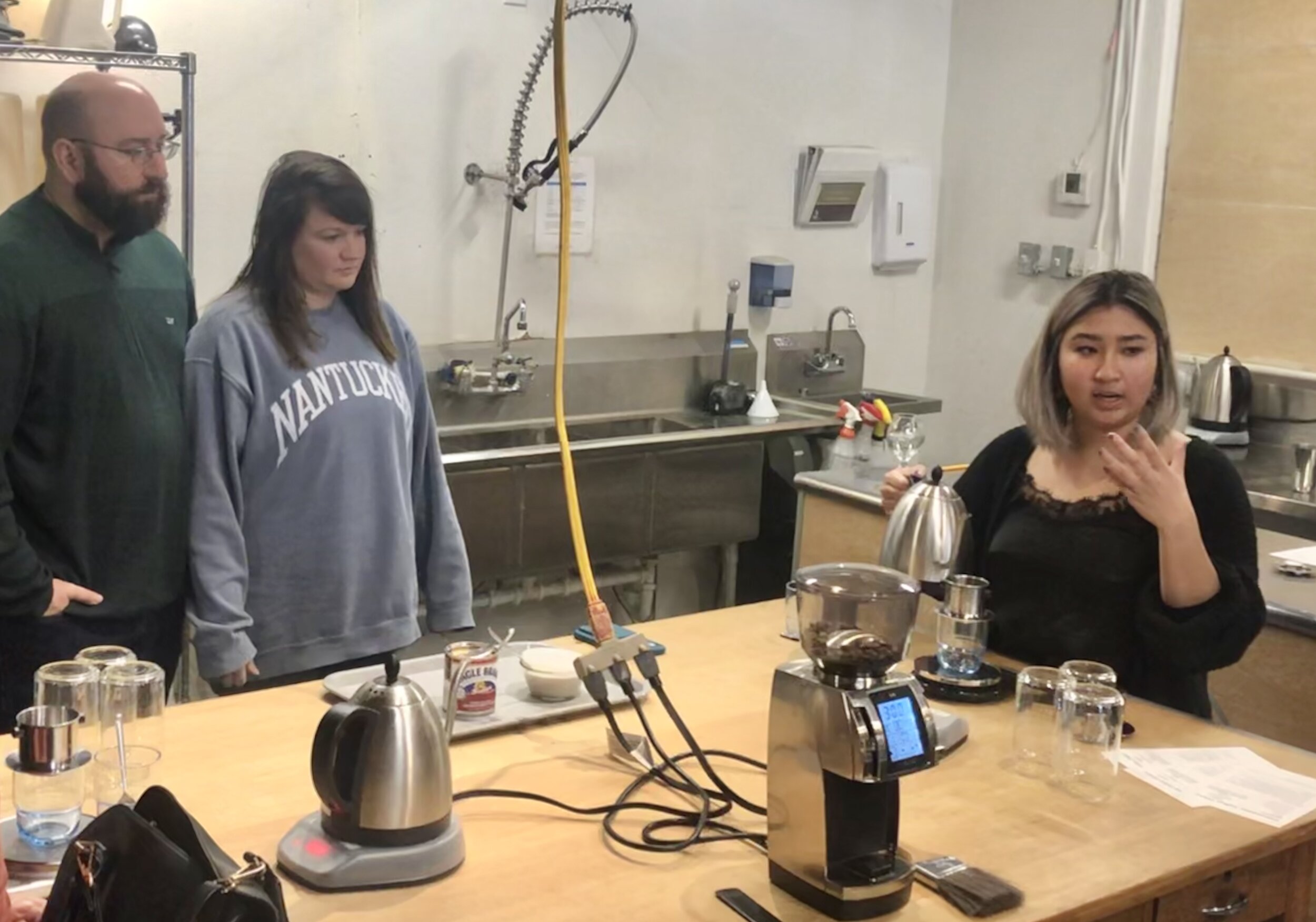
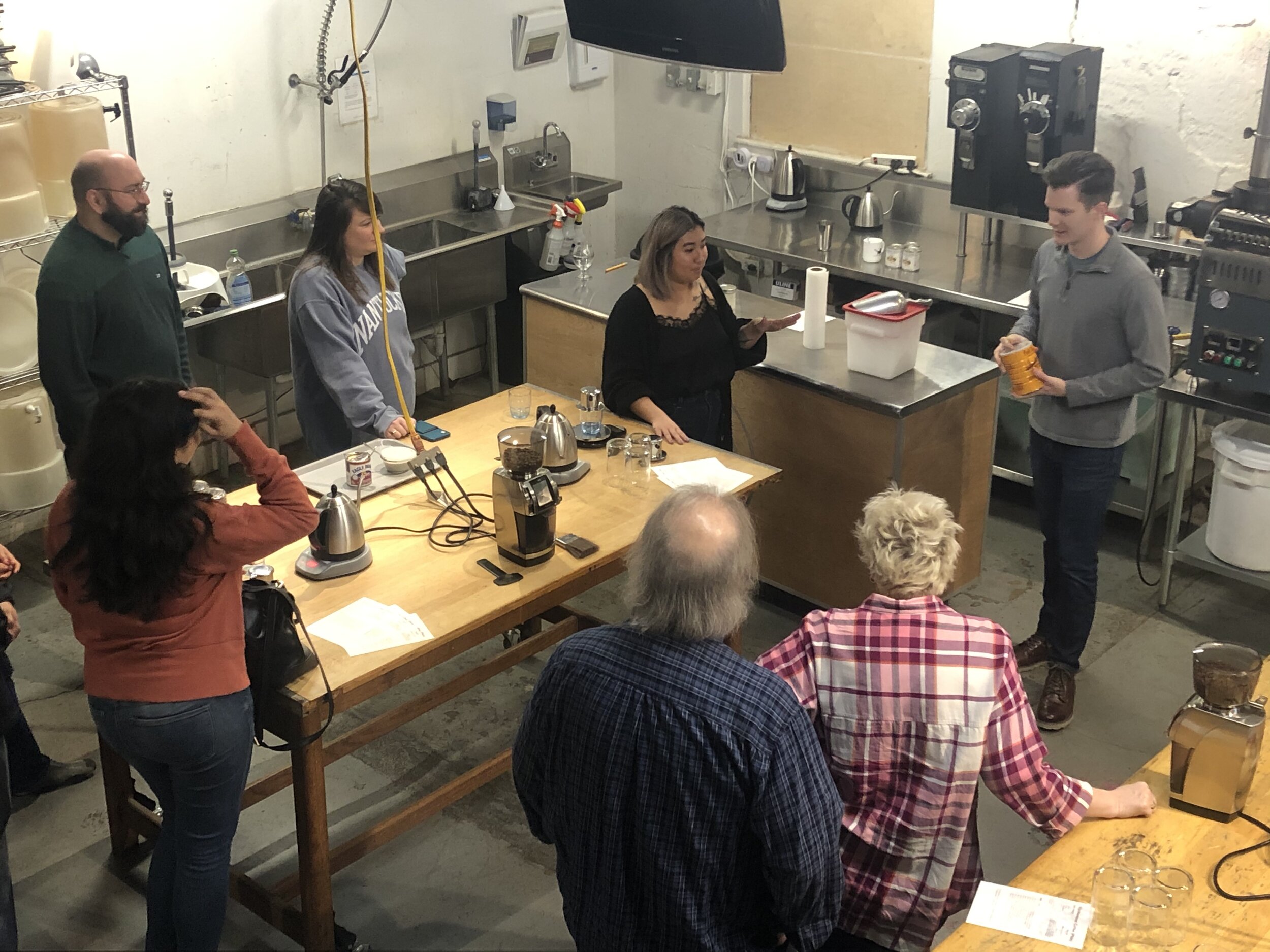
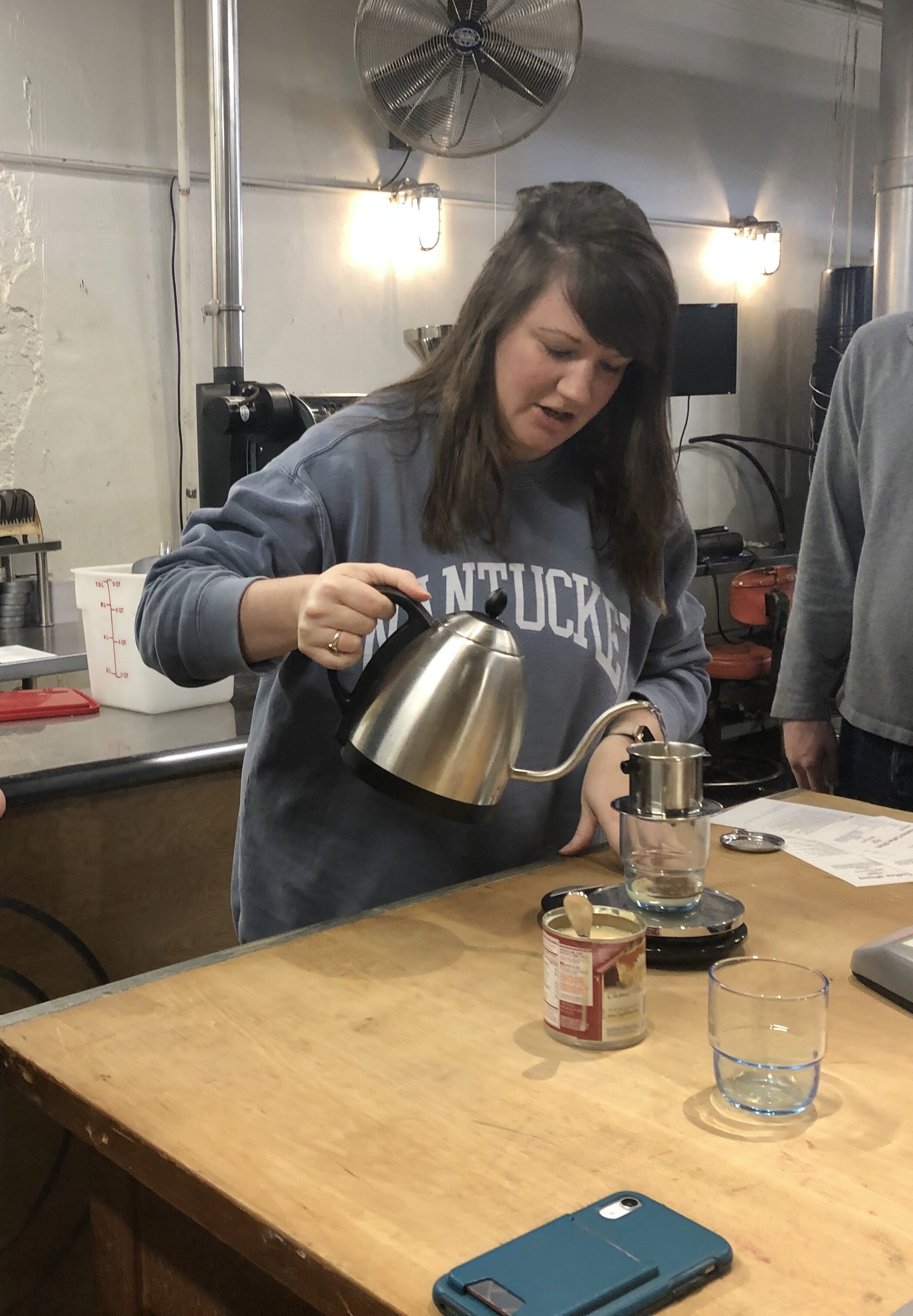
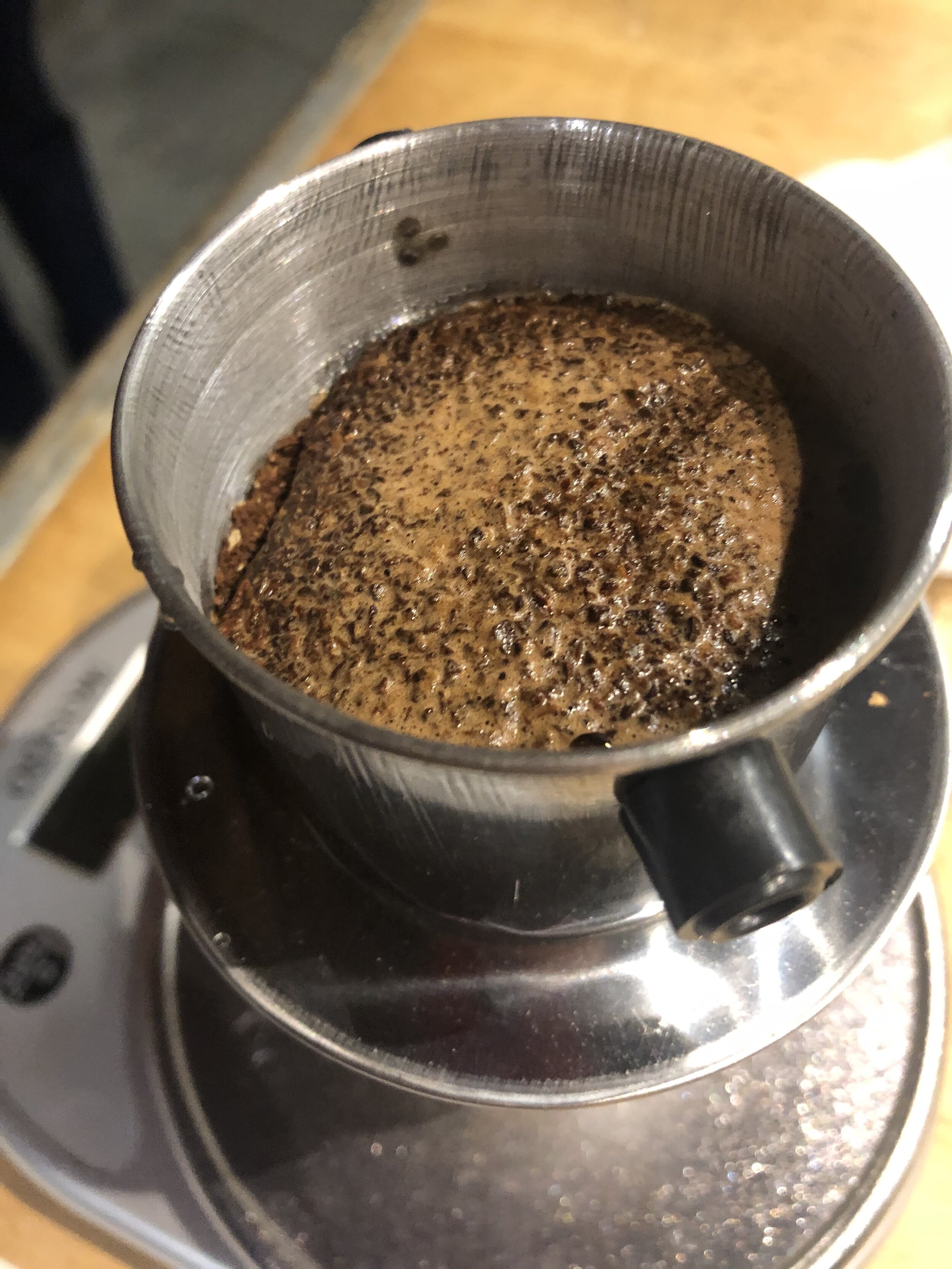
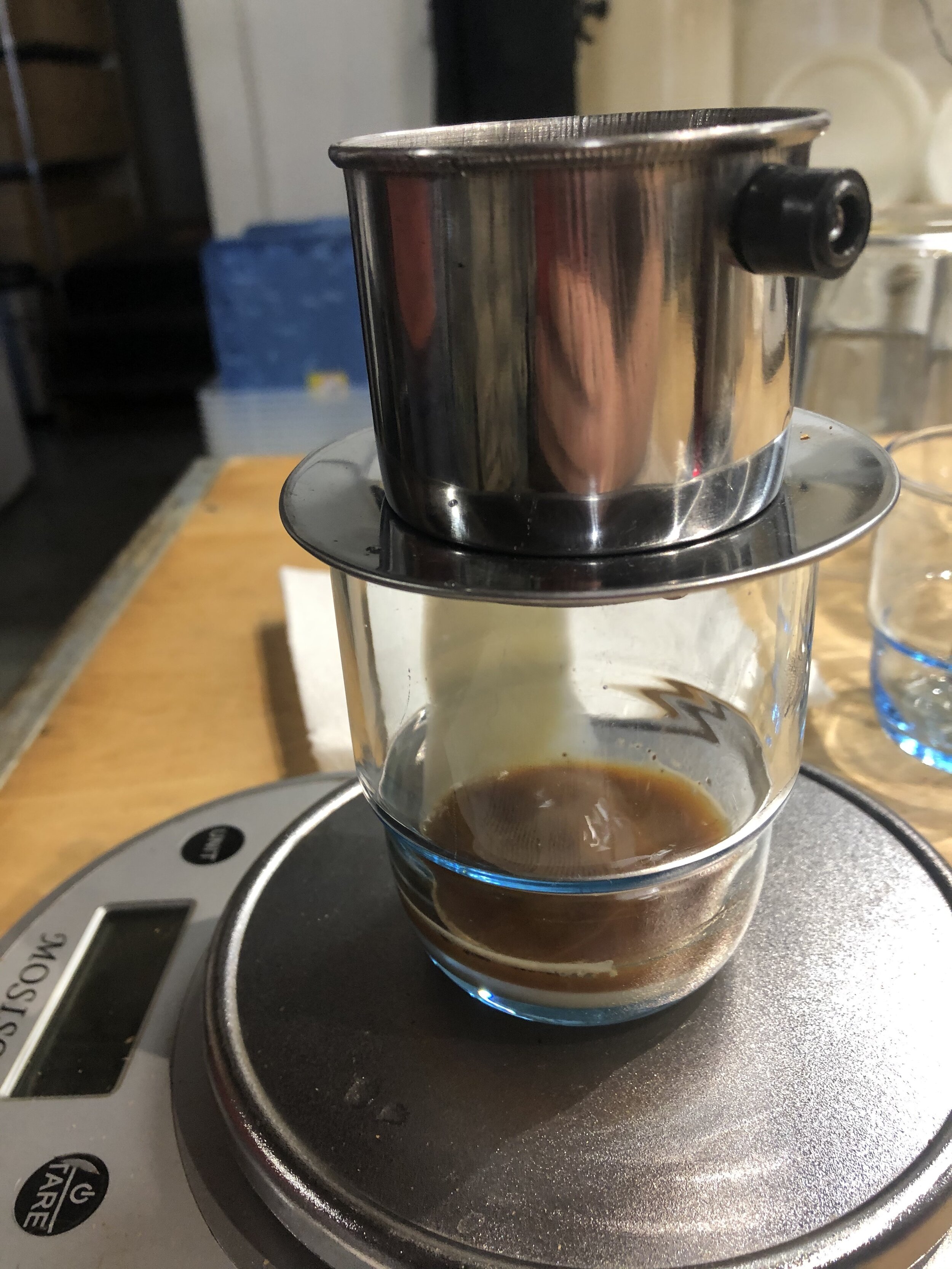
Diana Dinh remembers her first sip of coffee. Her grandfather handed over his mug and told her to take a sip. Diana swore she’d never touch the stuff again.
Thankfully she decided to give coffee another try and even became a barista. Recently Diana came by the Noble Coyote Coffee Lab to share her love of Vietnamese coffee with us, and teach us how to make it following her family’s recipe.
While some cafes will pour a shot of espresso over sweetened condensed milk, Diana finds comfort using a classic phin dripper. Her recipe calls for 30 grams of coarse ground coffee in a phin dripper above a glass containing 15 grams of sweetened condensed milk. Bloom the coffee by pouring 30 grams of 208 degree water into the dripper. Use a small spoon to break up any dry clumps and saturate the grounds. Pour an additional 60 grams of hot water and allow the coffee to drain before stirring the coffee and milk together. Enjoy hot or add ice.
We followed custom and used a bold, chocolatey coffee (our Colombia Caramanta) and it made a syrupy and sweet coffee drink that you could spend all day sipping. We also decided to buck tradition and make an iced coffee using Ethiopia Gesha Natural. Kyle, our head of education, said the taste reminded him of blueberry waffles, so feel free to experiment with the recipe and share your results with us!
2019 Golden Bean Awards
This week we received three Golden Bean Awards for our single-origin Uganda, Sumatra, and Nicaragua coffees. While we’re honored to receive this recognition, any accolades we collect deserve to be shared with everyone involved in bringing these beans to our Dallas roastery.
This week we received three Golden Bean Awards for our single-origin Uganda, Sumatra, and Nicaragua coffees. While we’re honored to receive this recognition, any accolades we collect deserve to be shared with everyone involved in bringing these beans to our Dallas roastery.
The quality of the coffee that we roast begins where it's grown. Were it not for the incredible hard work and attention to detail that the producers put into their coffee, we would not be able to create these delicious cups. And were it not for the exporters and the importers putting in time at origin countries, making connections, and ensuring that the green beans are transported safely, no coffee would ever even arrive at our roastery. We are grateful to Anthem and Homage for connecting us to the producers at Mierisch Family Farms, Santiang Exports, and Hillside Coffee International.
There are so many people to thank, some of whom we may not even be aware of. The reality is that hundreds, maybe thousands of people - pickers, sorters, washers, millers, drivers, tasters, buyers, - touched this coffee before we had a chance to roast it.
To all of them, we are grateful.

Our Organic Ethiopia Guji Natural is a 2019 Good Food Award Finalist
Noble Coyote Coffee is one of 25 finalists in this year’s Coffee category.

We’re thrilled to announce for the second consecutive year that we are finalists for the Good Food Awards! Noble Coyote Coffee is one of 25 finalists in this year’s Coffee category. We were chosen from a pool of more than 2,000 entries.
We presented our Ethiopia Guji Highlands - an organic naturally processed coffee with a creamy cup and notes of peach and strawberry - to the judges at the Good Food Awards. The Guji Highland Farm was founded in 2012 and only mills naturally processed coffee cherries. The farm is situated under the canopy of the surrounding natural forest.
The Good Food Foundation celebrates authentic and sustainable sourced food from all 50 states. Winners will be announced in January at a gala in the historic San Francisco War Memorial & Performing Arts Center.

Y'all ... We have new bags!
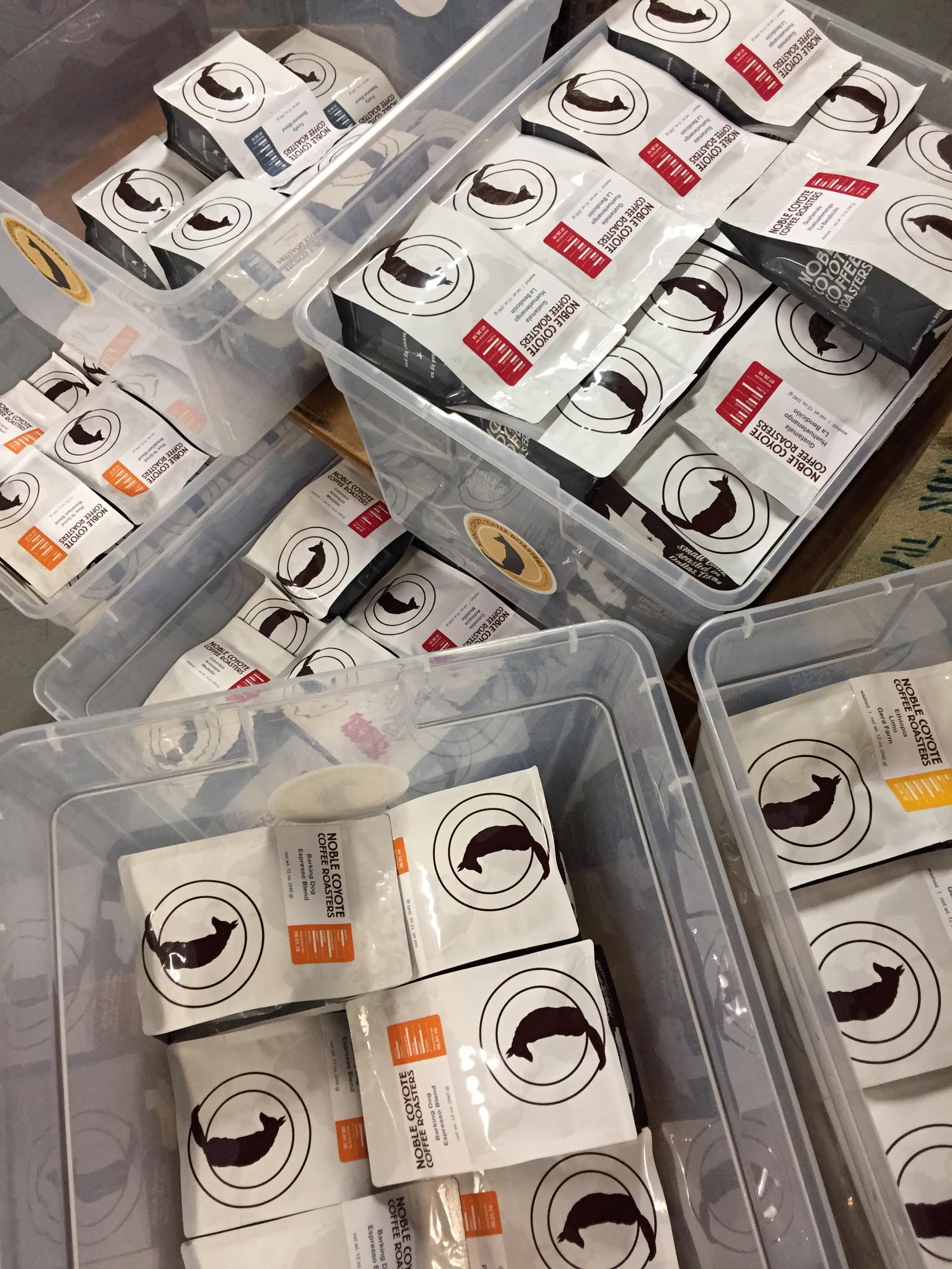
Fresh bags and fresh coffee. It doesn’t get much better.
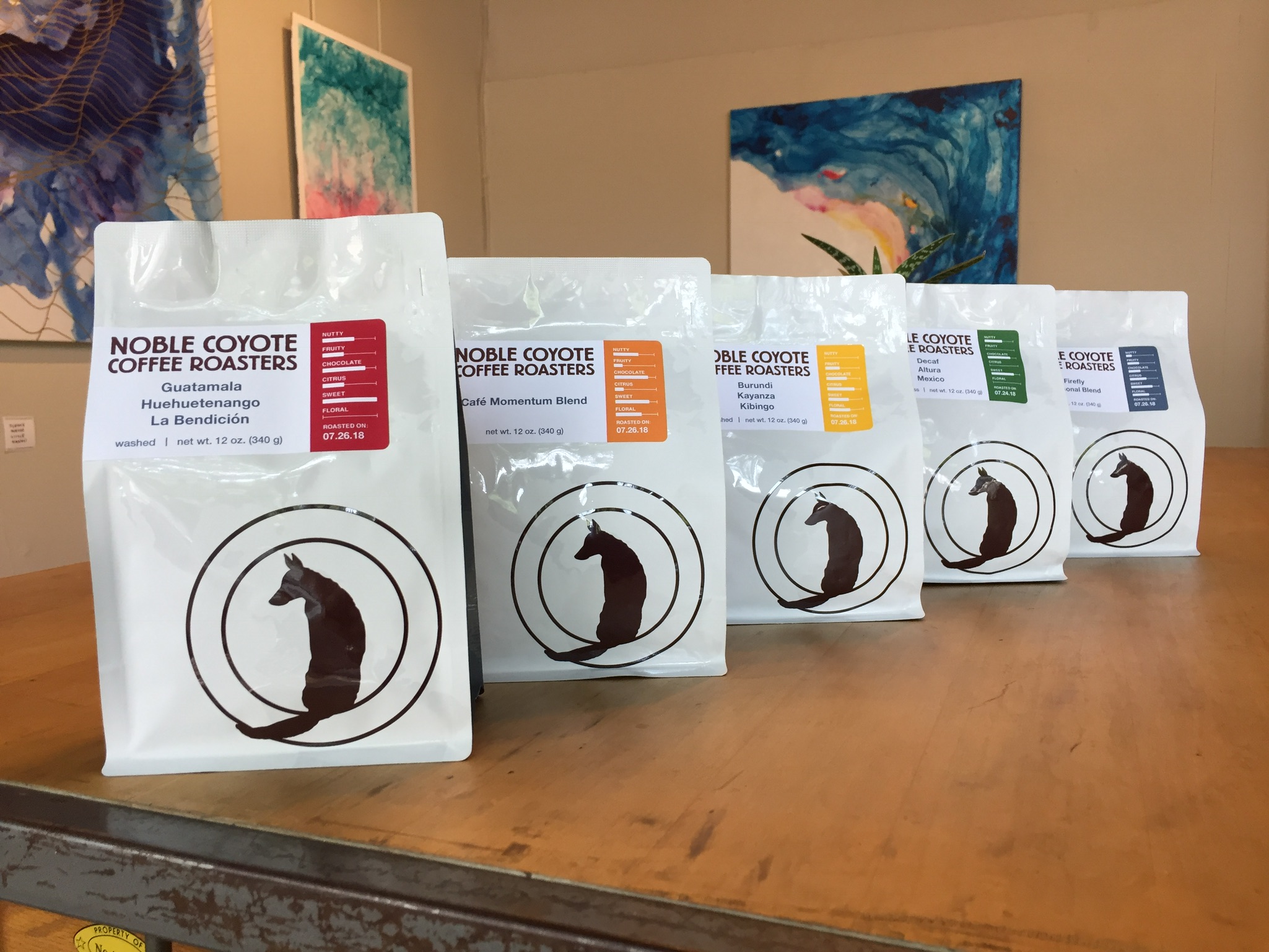
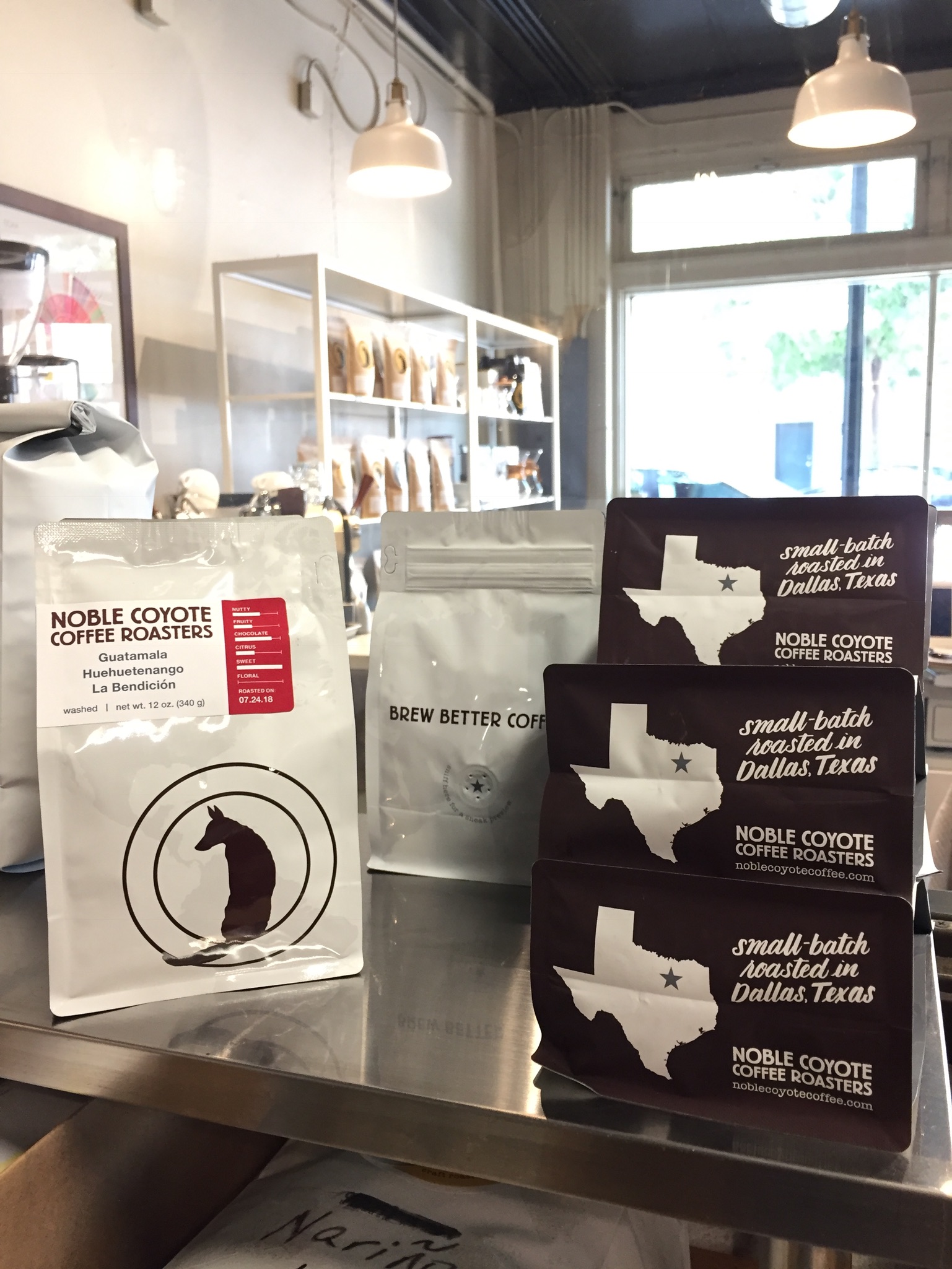
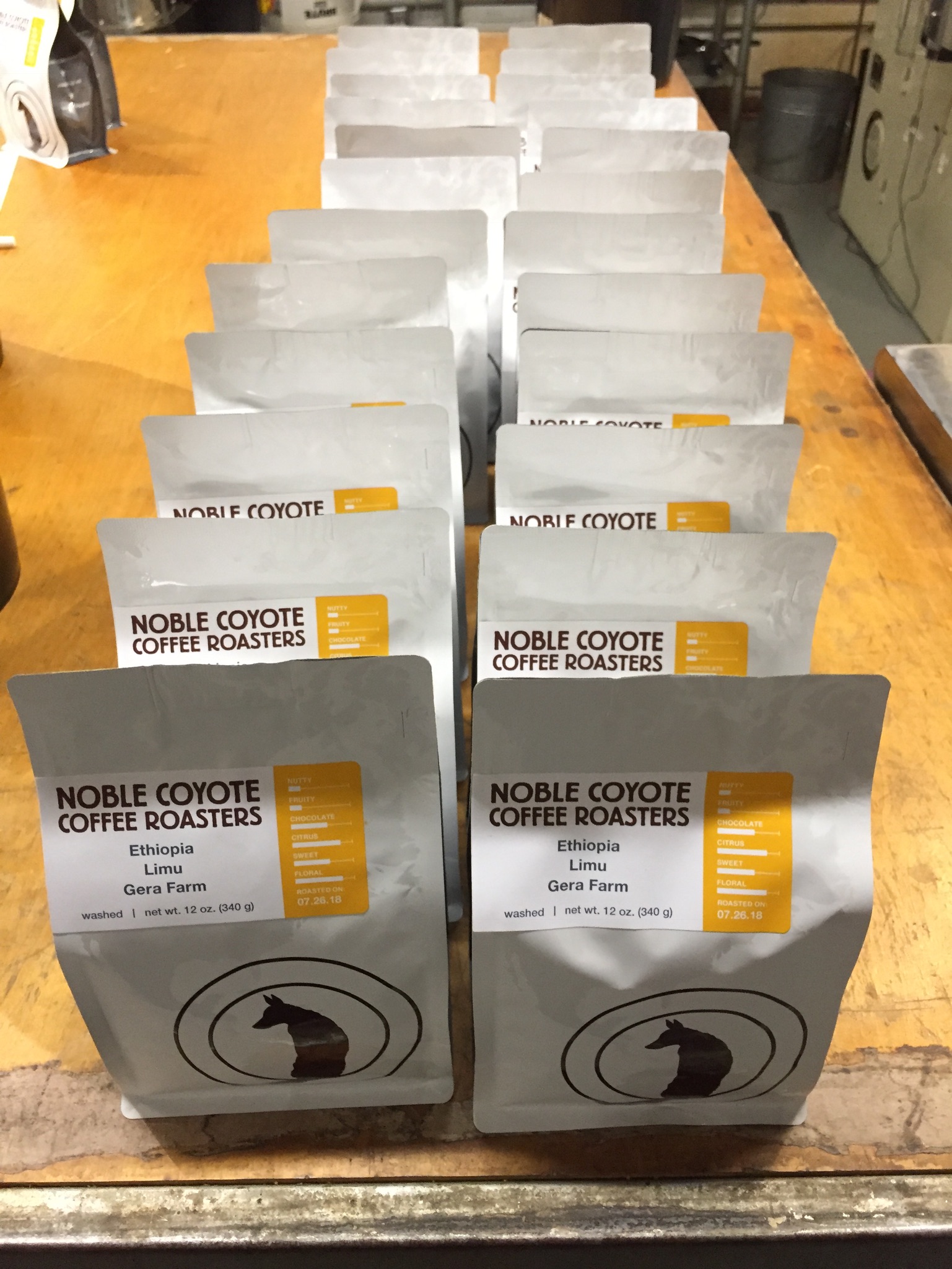
Fresh bags and fresh coffee. It doesn’t get much better.
Our new look bags feature a unique metric that reveals the different tastes each of our coffees bring to your mug.
Our simple metric shows six flavor characteristics: Nutty, Fruity, Chocolate, Citrus, Sweet, and Floral. Beside each flavor is a sliding bar that reveals the level of intensity. Our naturally processed Ethiopia Guji Highlands, for example, has high levels in the fruity and sweet categories. The La Bendición Guatemala shows a lofty level for nutty, and our Barking Dog Espresso blend is off the charts when it comes to chocolate and sweetness.

The six flavor characteristics come from the Coffee Taster’s Flavor Wheel. Attendees of our cuppings and classes know that we use the flavor wheel as a tool to determine the distinct tastes of our coffee offerings. If you’re interested in seeing our specific tasting notes you can find those described with each of our coffees.
You’ll also notice each label has a streak of color around the flavor scale. Those aren’t chosen by random. We chose these colors because they are symbolic of the hues of coffee cherries as they develop and ripen in nature.

Red represents single origins from Central and South America
Yellow symbolizes single origins from Africa
Orange is for our core blends
Green is on our decaf bags
Our special seasonal offerings and blends will be identified with blue.
We hope you enjoy our new look!
Raising the bar on coffee education
We first started offering classes at Noble Coyote Coffee in December of 2016. The first class centered around brewing on a Chemex with a little discussion about grind size and how that affects the outcome of your coffee. I think 6 people attended, and 4 of those were family or friends of the staff here. It was a humble start, but that was the whole point: get started.

By Kyle Simmons
We first started offering classes at Noble Coyote Coffee in December of 2016. The first class centered around brewing on a Chemex with a little discussion about grind size and how that affects the outcome of your coffee. I think 6 people attended, and 4 of those were family or friends of the staff here. It was a humble start, but that was the whole point: get started.
And now here we are more than a year and-a-half later. We hold cuppings on every first Saturday of the month and brew classes every third Saturday (with few exceptions). Our cuppings average more than 20 people, sometimes reaching over 30. At the most recent brew class about the AeroPress, we had about 15 people in attendance. This is just to say that attendance has been good – in some cases too good – and we feel confident that coffee education is something people have a real interest in. Heck, D Magazine even made up an award for us.
We are immensely satisfied with the success of our education program so far. With that in mind, we continue to try new things that we hope will make the experience even better for our student customers.
1. Classes Now Cost $10 (Beginning July 21)
Up to now, we've been offering our public cuppings and brew classes for free. I am a big believer that education should be accessible to everyone. And having put these classes together over the past year and a half, I'm also a believer in having the resources to grow. The revenue from our classes will help us develop more and better classes, plain and simple. It will allow us to purchase materials and equipment. It will also help offset staffing costs. My hope is that our student customers will see this as an investment in a program that really does deliver something of value that, frankly, will cost you a lot more somewhere else.
2. Interactive Brew Classes
The goal of our brew classes has been to show students how to brew better coffee. This has always involved demonstrations whereby I brew some coffee and explain what I'm doing, and the students watch me. This falls short of the goal to me. If you wanted to watch someone brew a pourover, you could buy one at the bar, and you'd get a full cup of coffee for your trouble! You came to learn how, so I want you to get some hands-on experience. From here on, the major objectives of our brew classes will be experience driven. This means at the least you will get to do some sensory analysis (smelling and tasting), and my goal whenever possible is for students to do the brewing.
3. Class Sizes Capped
Part of the value of our classes is getting to interact with everyone else in the room. We want you to ask questions, to compare notes with your classmates, and to feel like you can be heard. With 30 people in the room and 1 instructor, people tend to clam up. Plus, it just gets hot and crowded and that's not fun. By capping our classes we can ensure that students are provided a learning environment conducive to thoughtful discussion. It will also help with our second point of making the classes more interactive. We realize that this may mean classes fill up and some people are unable to join on a particular date. Trust me, if this happens enough, we will add more class dates. Until that time, we advise everyone to register for classes early.
4. More Better Stuff
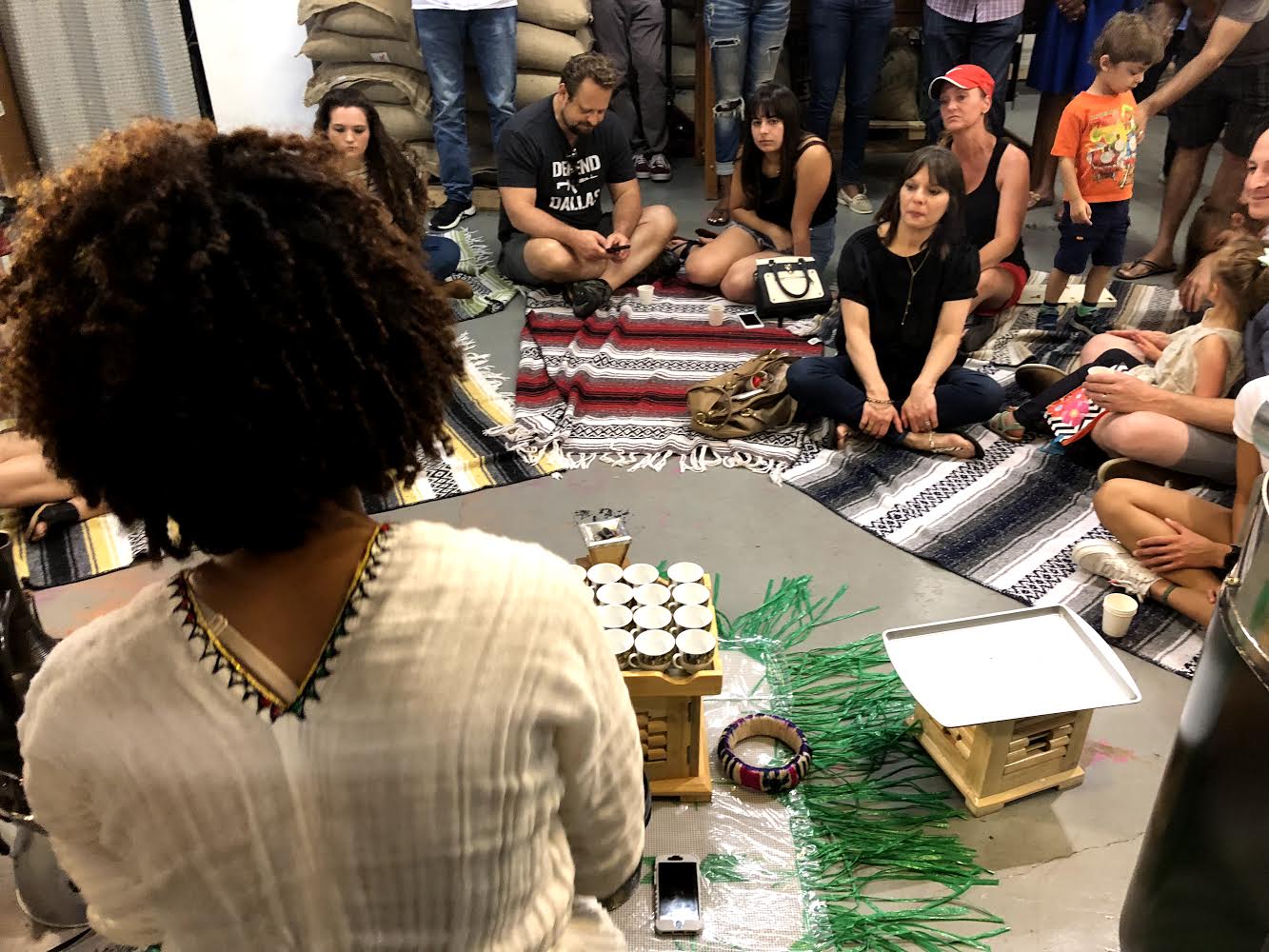
In addition to our regularly scheduled cuppings and brew classes, we have begun throwing in some other odd events here and there. In June we hosted a traditional Ethiopian coffee ceremony that drew a big crowd and was so fun to put on. We also recently hosted a palate training event by the Dallas Coffee Gxls, a woman-run organization here in Dallas with a mission of empowering femme-identifying folx in the local coffee community. These events, run by individuals adjacent to Noble Coyote, were very rewarding for us as a company because they brought in fresh perspectives and people. Also, after being in front of the class every other week, it's nice to actually participate in something as a student sometimes! We have also begun developing a secondary line of classes that, as of now, don't have regularly planned dates. We call these master classes because they are designed to be deep dives into a particular subject. For example, our first master class covered water chemistry as it pertains to brewing coffee, and students finished the class by formulating their own brew water. In July, we will have a master class that deconstructs how we taste with the goal of preparing students to practice tasting as a skill. Master classes are generally more expensive than our regularly scheduled programming, but they allow students to take a real big bite of the subject matter, and they will walk away knowing how to do something.
I have enjoyed immensely seeing this program develop to where it is today. It has been a pleasure to see some of you come to multiple cuppings and classes. And it's always mind blowing to me how many newcomers attend. Just when I think I've become too big of a coffee nerd, there's a whole room full of people wanting to learn how to taste better or which brew method is going to make their morning cup have a fuller body or whether pourovers really do taste better (they do when you make them with love). It's inspiring to be in such good company. I really look forward to the future of Noble Coyote Coffee Education.

Lab Report: Ethiopian Coffee Ceremony
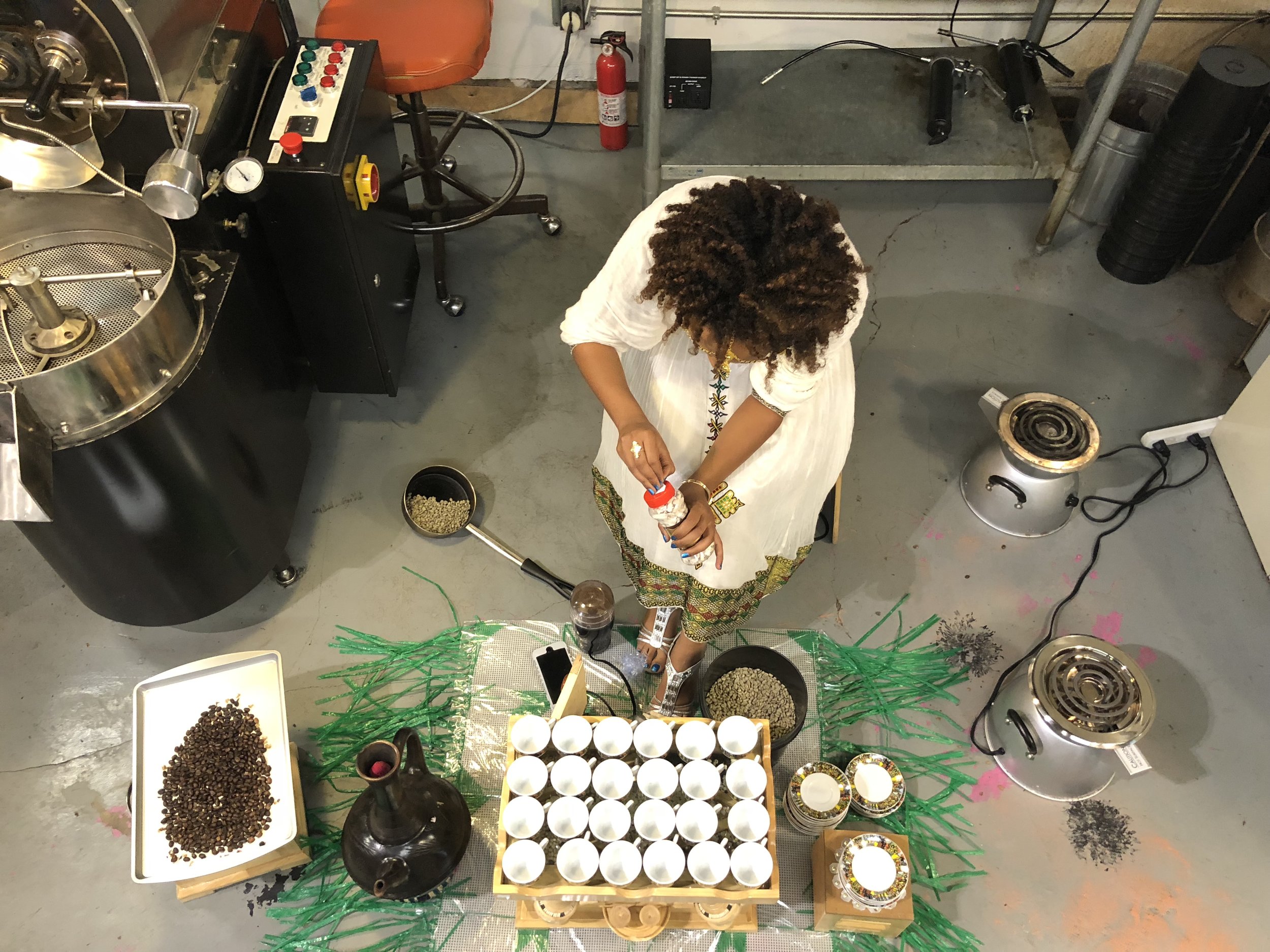
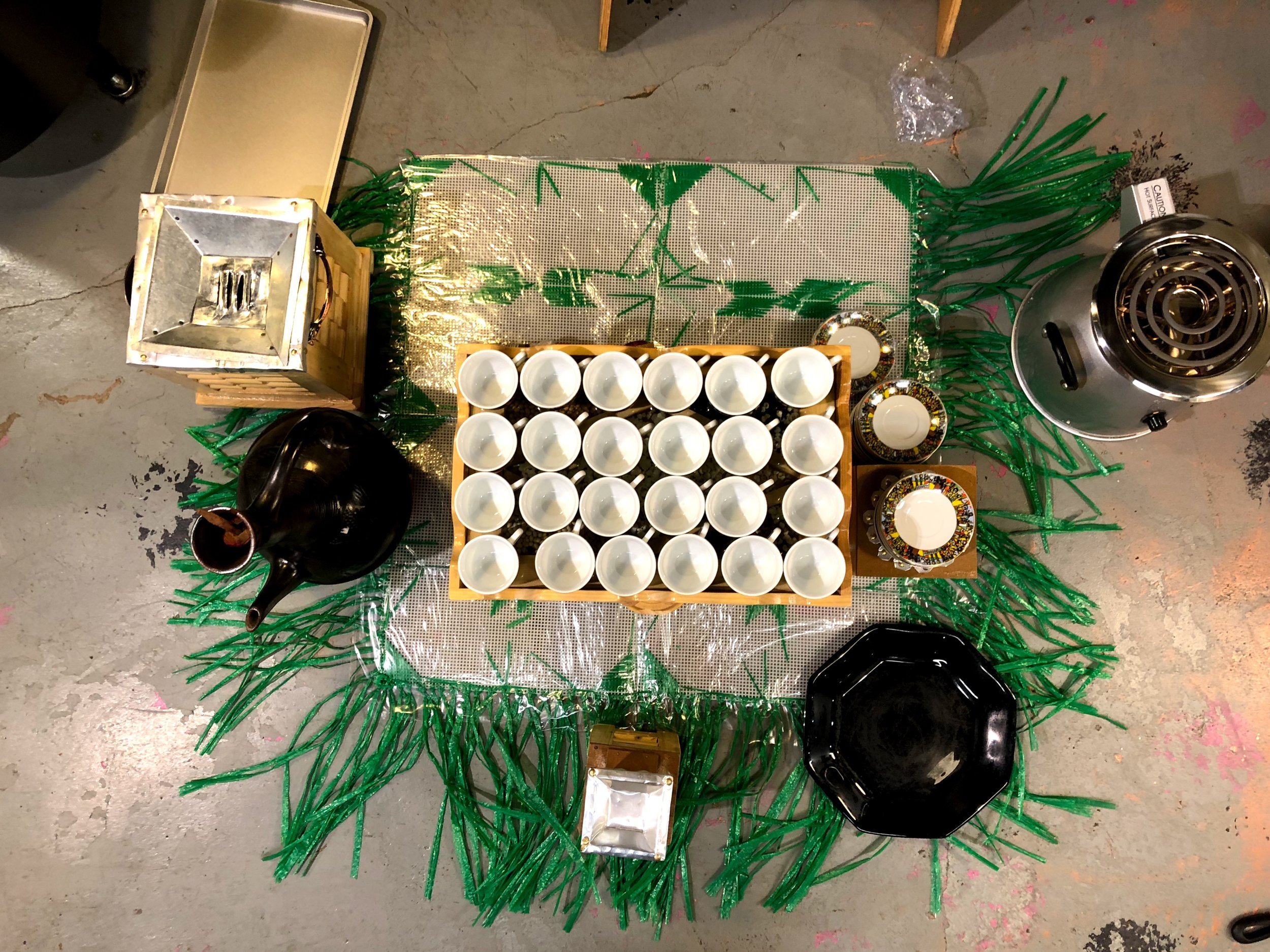
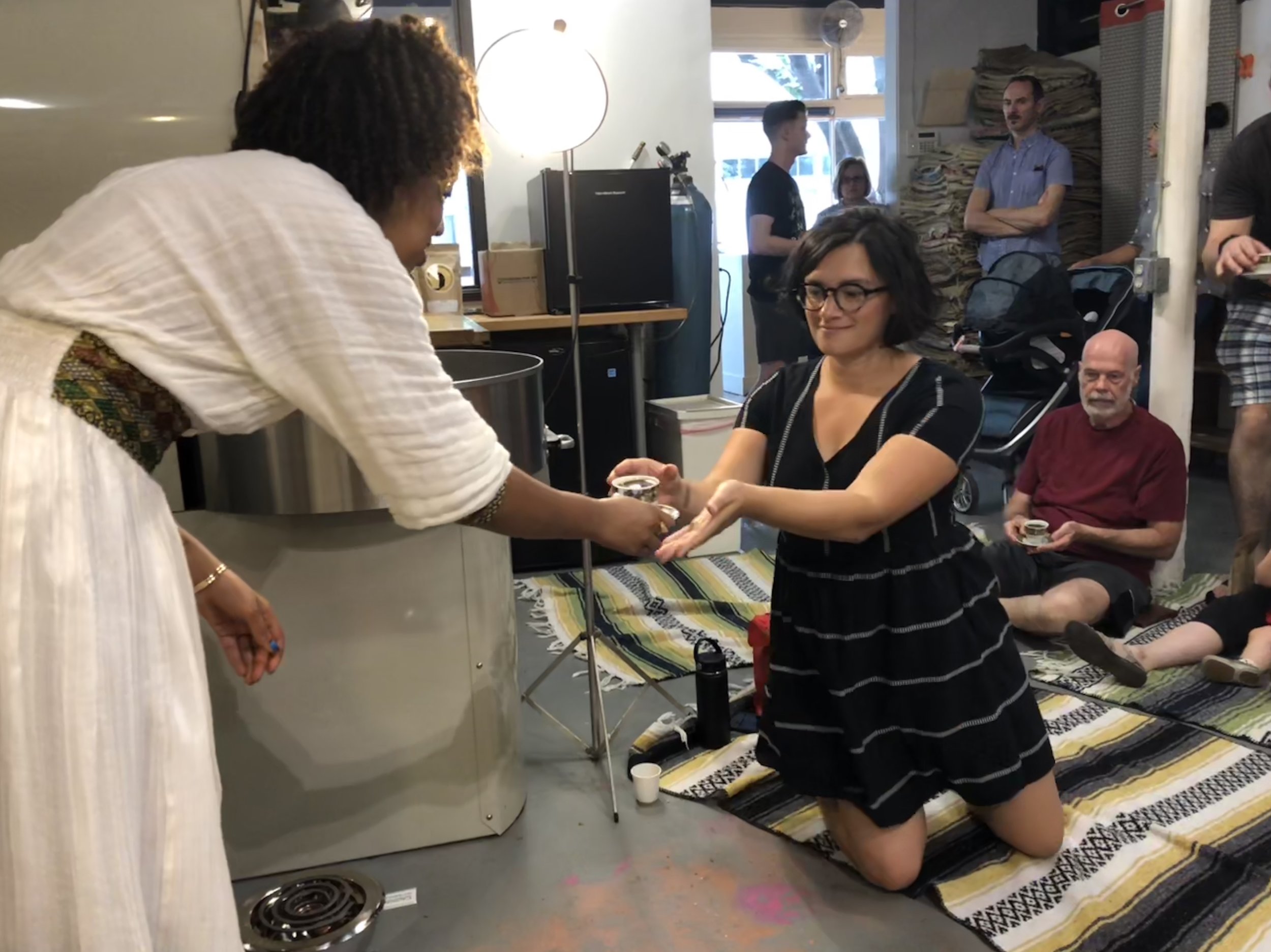
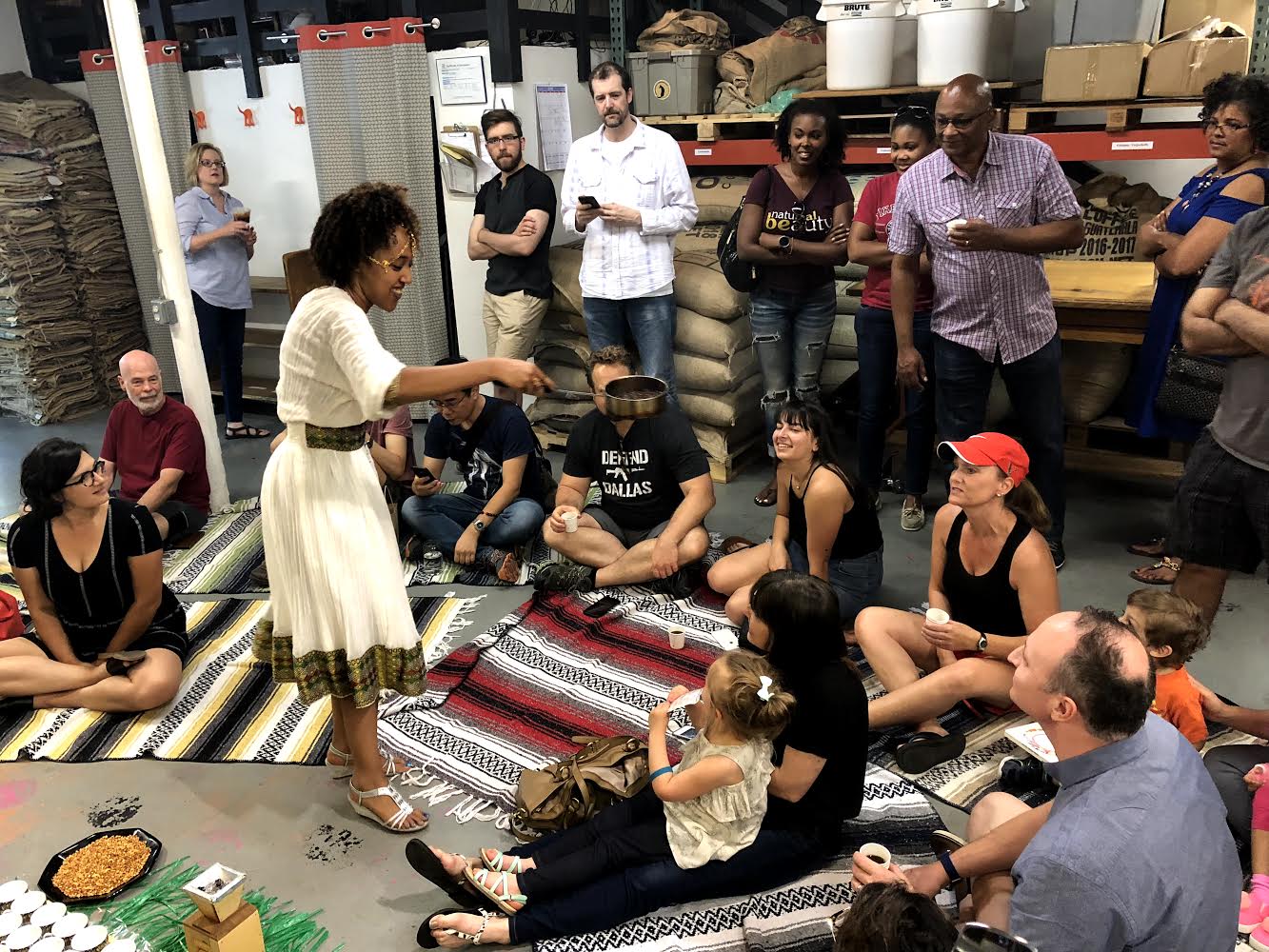
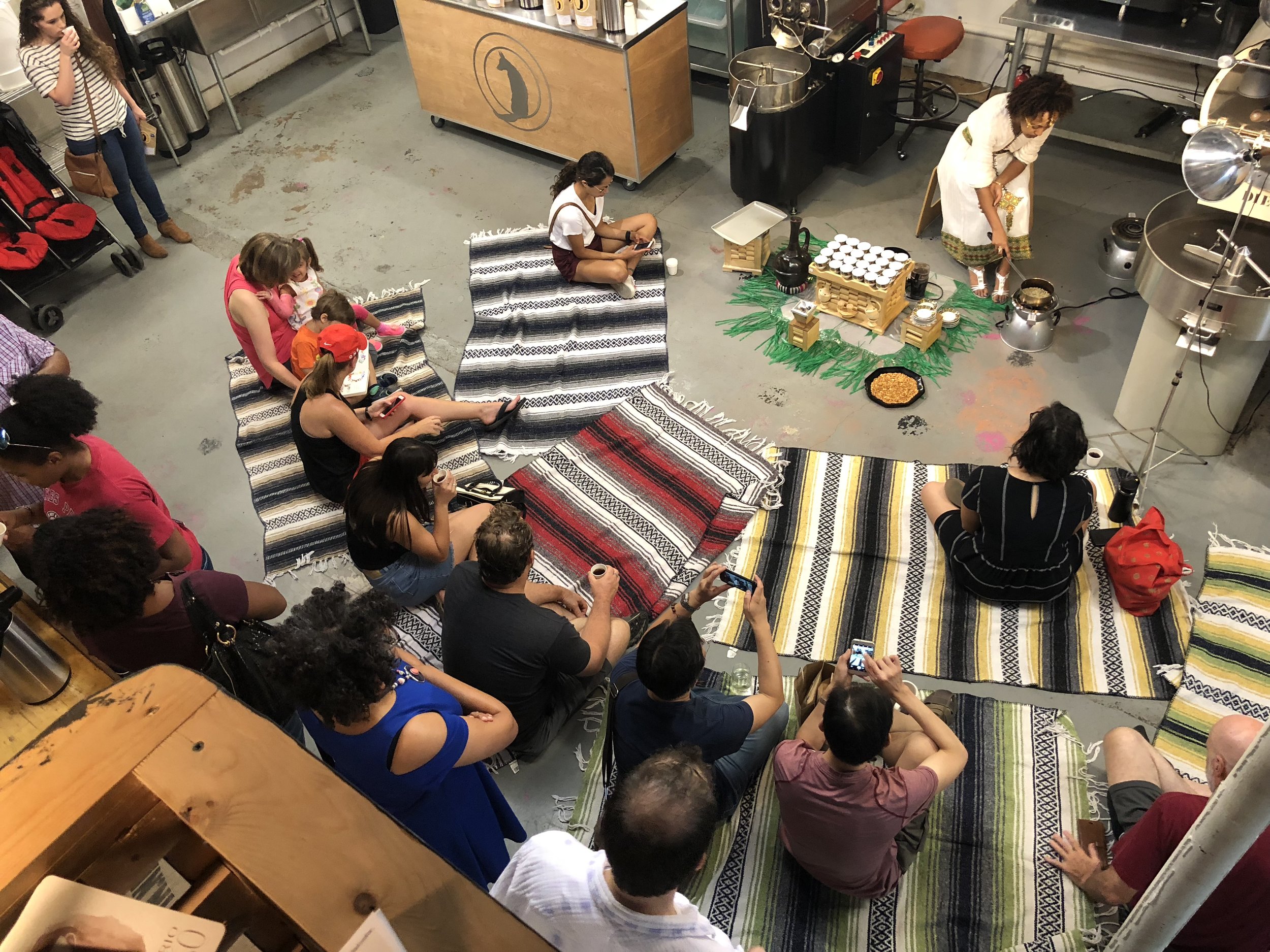
When Rediet Begashaw arrived at the shop, I knew I was in for something different. She started by placing decorative ceramic cups and saucers, an electric stovetop, and a special pitcher called a jebena on the ground. While the ceremony that followed wasn’t formal, it was completely eye opening when she said the centuries-old spectacle takes place nearly every day.
By Steve Dickerson
Most of the time, when I want coffee in the morning, it’s a pretty easy task. Grind the beans, boil the water, combine the beans and the water, wait, filter, and enjoy.
So when I learned we (Noble Coyote Coffee Roasters) planned an Ethiopian Coffee Ceremony at the roastery I wasn’t sure what to expect. Ceremonies tend to be pretty formal affairs and that is not at all what it looks like while I force myself to make coffee after emerging from my bed. How long is a ceremony? After all, when I make coffee I want the process done as quickly as possible.
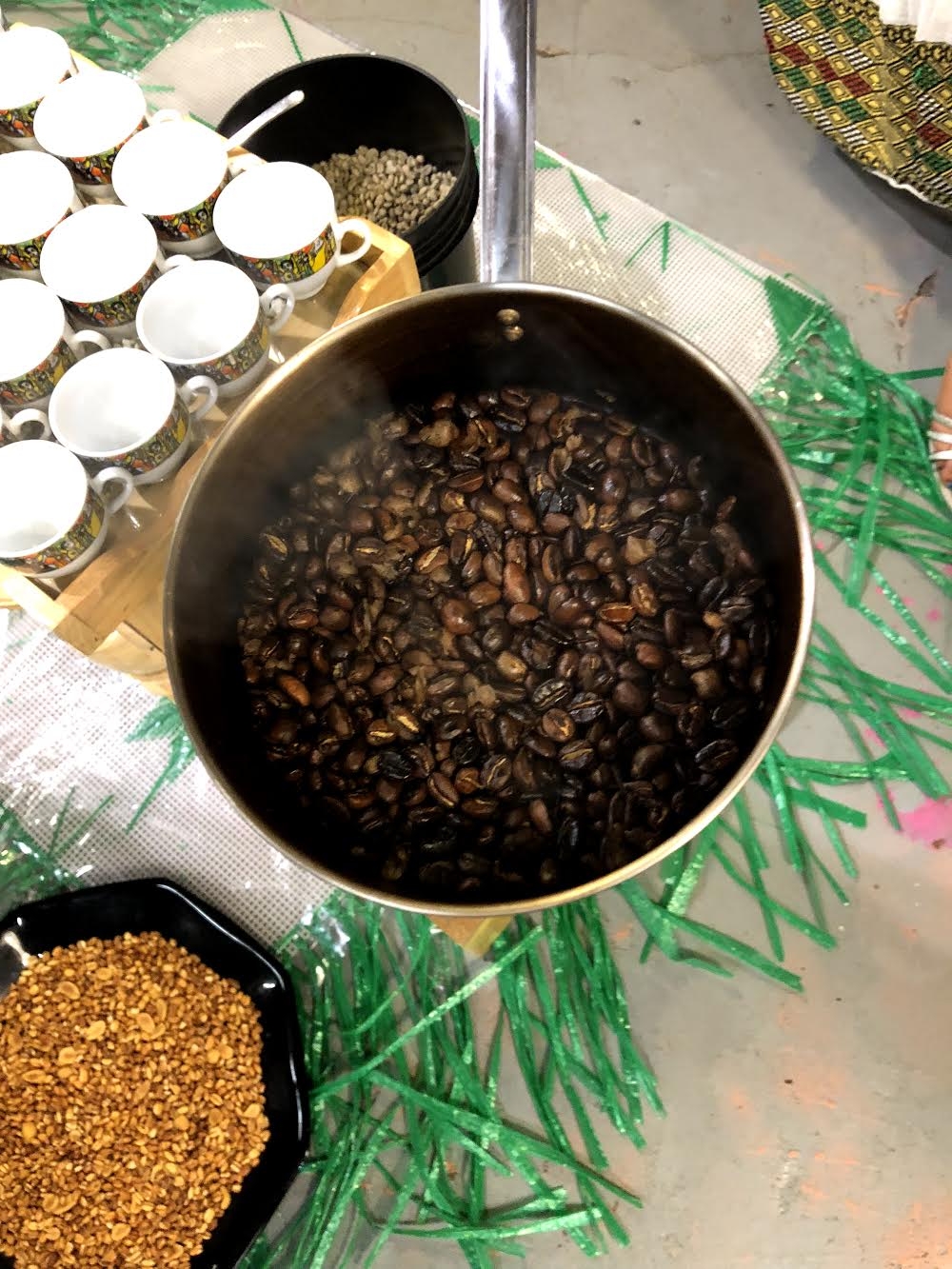
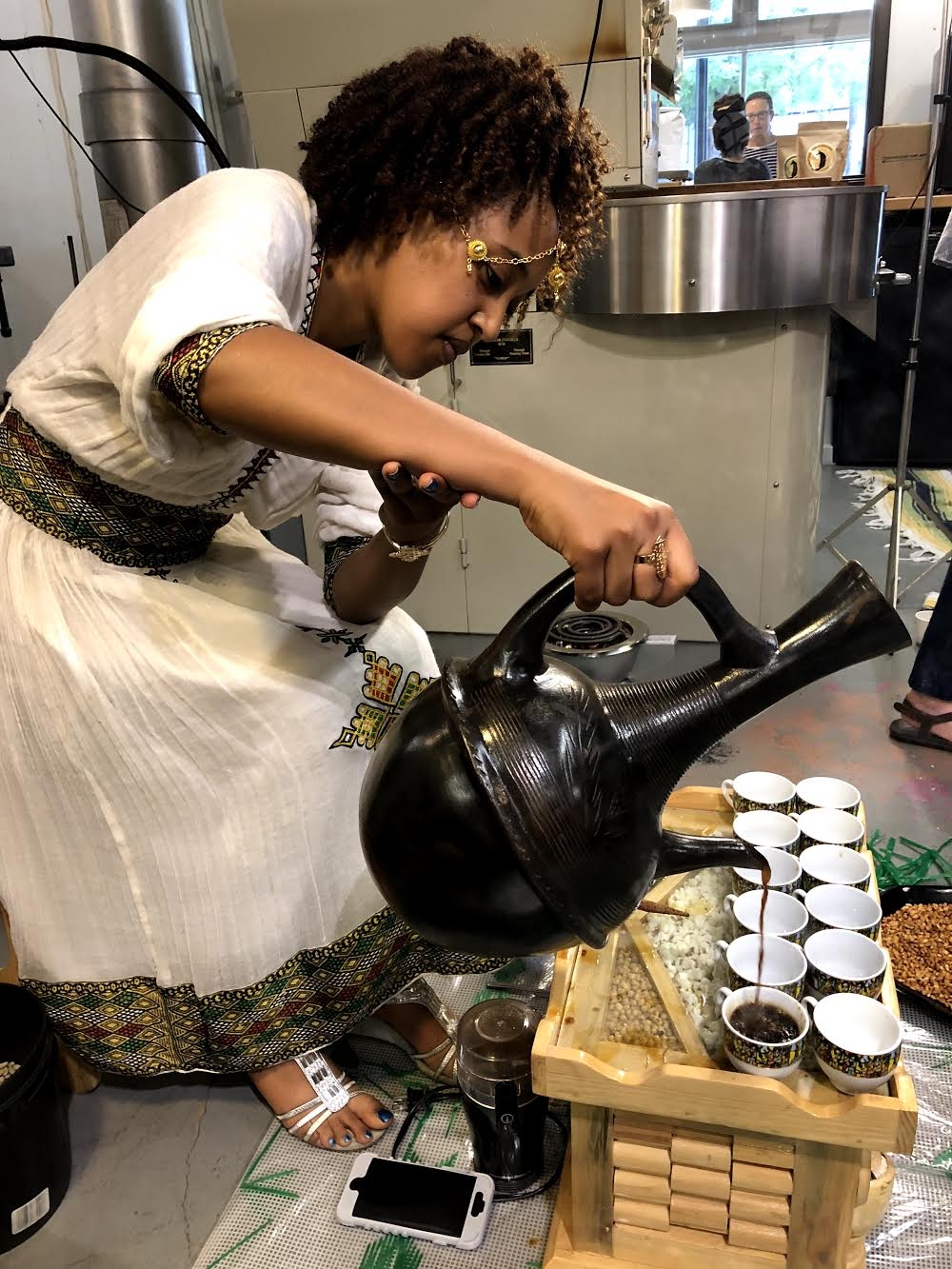
When Rediet Begashaw arrived at the shop, I knew I was in for something different. She started by placing decorative ceramic cups and saucers, an electric stovetop, and a special pitcher called a jebena on the ground. While the ceremony that followed wasn’t formal, it was completely eye opening when she said the centuries-old spectacle takes place nearly every day.
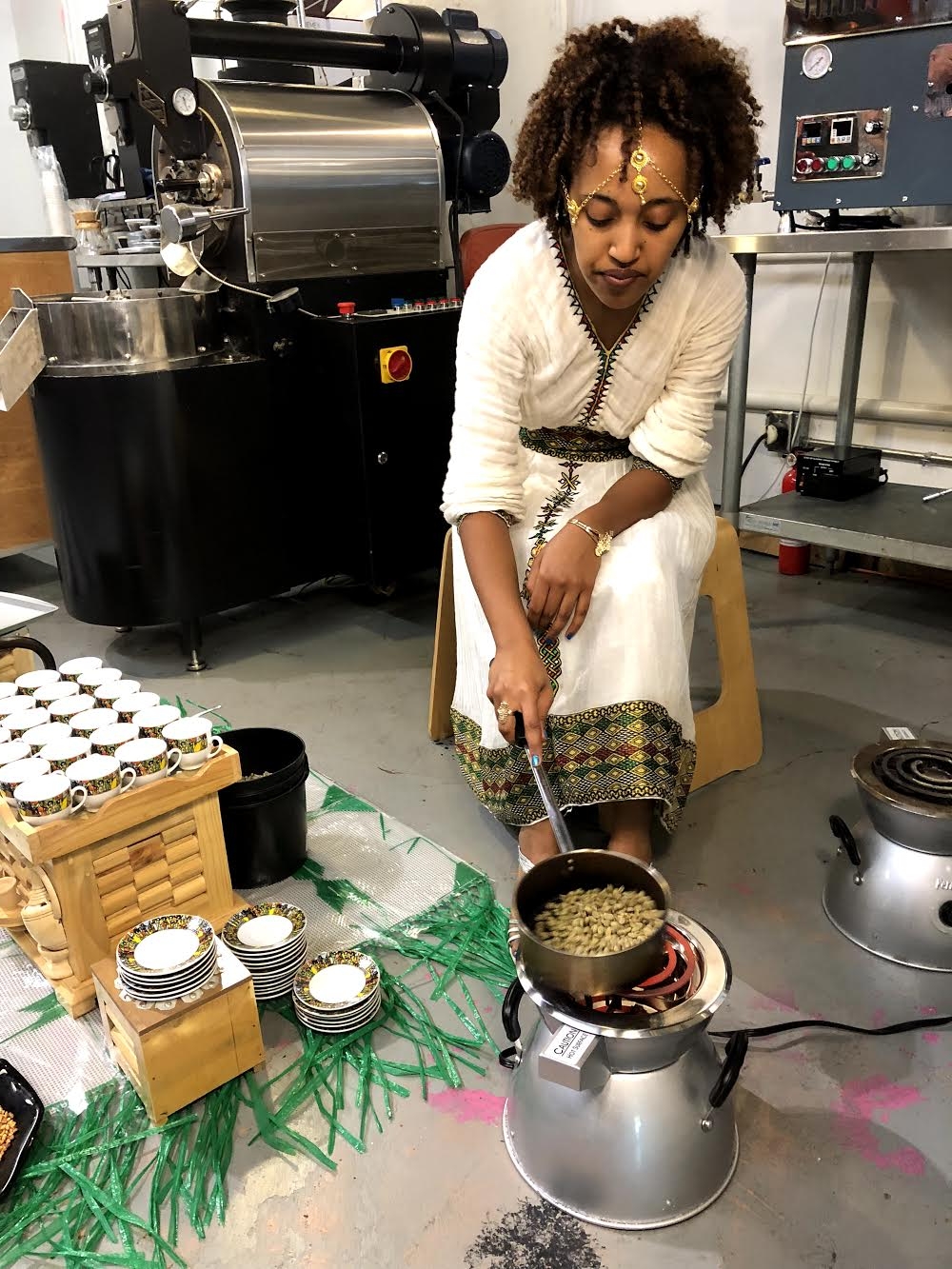
She started by lighting incense, and then poured a handful of beans into a pot with a long handle and began roasting them over a stovetop roaster, shaking it every now and then like you would while making popcorn on the stovetop. To keep the beans moving, she said, ensures a more even roast.
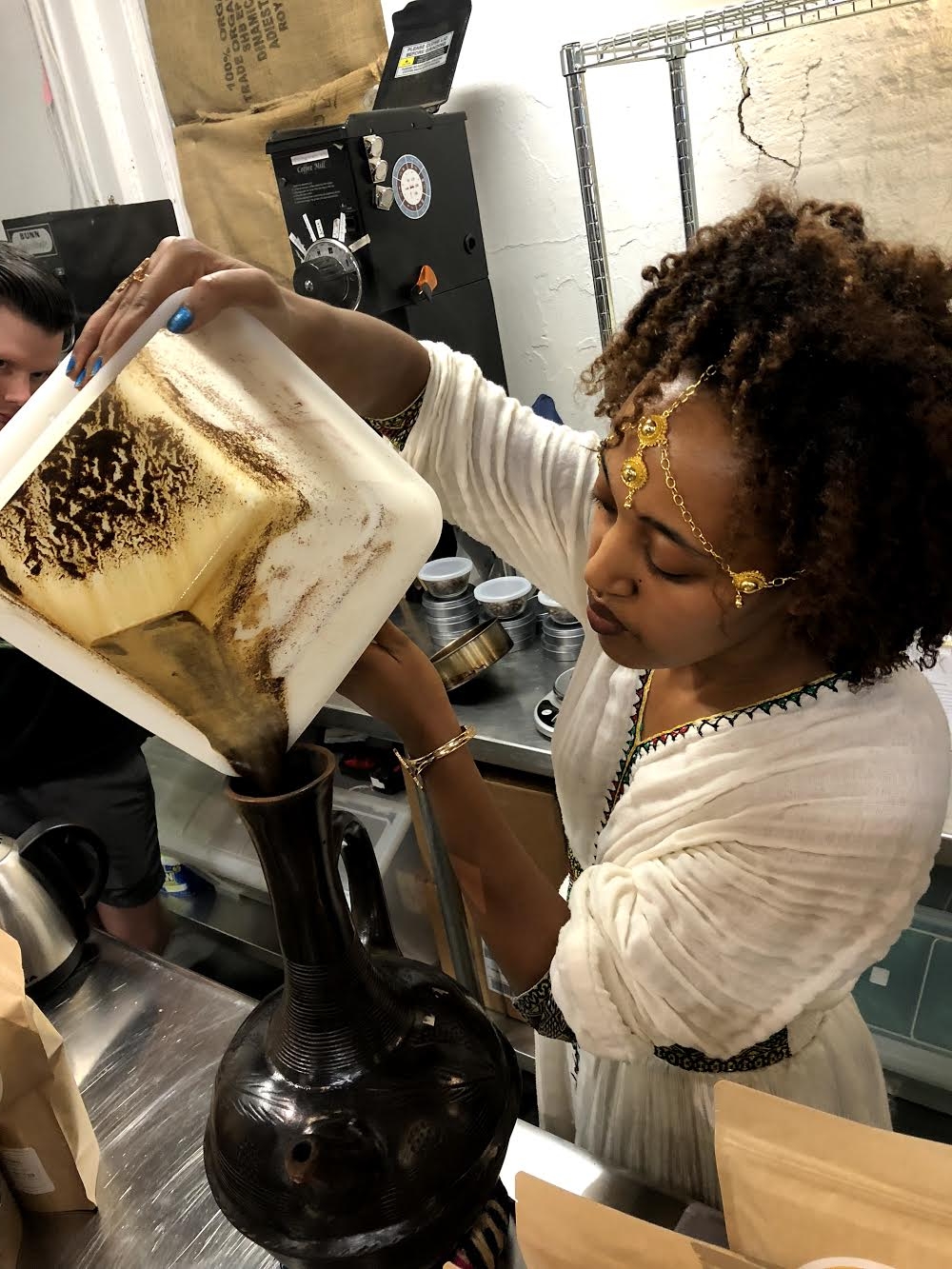
Once the beans were roasted to a dark finish, Rediet ground the beans (traditionally done with a mortar and pestle, we elected for a more modern approach) and poured water over them allowing them to steep. She then transferred the coffee into the jebena to steep a second time. This allowed the beans to settle into the bottom of the clay pitcher before pouring.
The conventional wisdom around coffee is that it needs to rest after roasting. This time allows the beans to naturally offgas C02, permitting water to penetrate the bean when it’s time to actually make coffee. So I was a little apprehensive when Rediet handed me a cup of coffee that was literally as fresh as possible, and roasted darker than I would normally like. But the coffee she served me was terrific. Rich and spiced and completely satisfying.
I’m really glad we were able to bring a new perspective to the shop. So often we forget that coffee is a global product, and one with roots in many different cultures and traditions. I’m hopeful that we can bring in even more perspectives as we continue to teach our customers and ourselves about coffee.

Field Trip : Coffee Expo
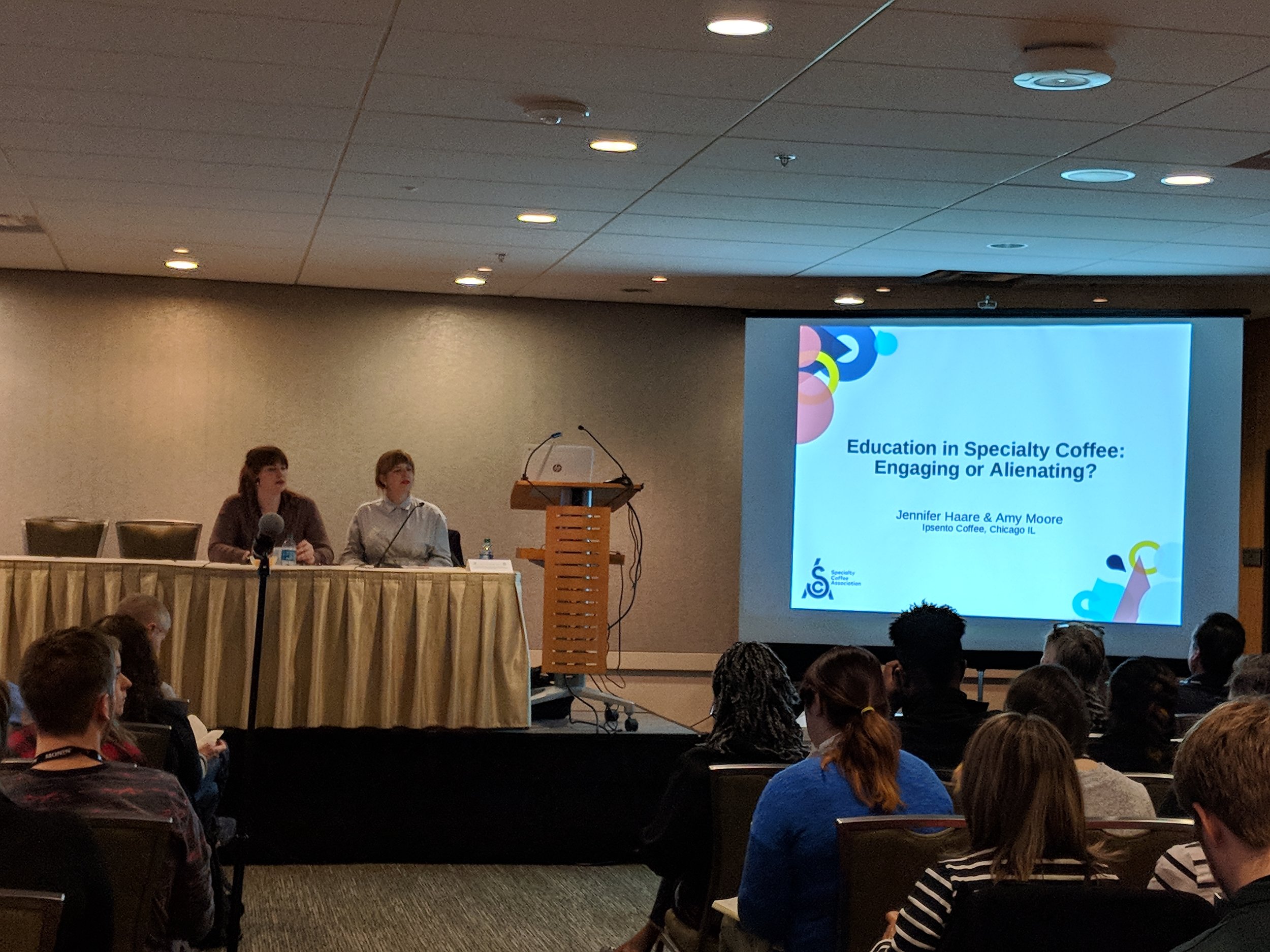
The Specialty Coffee Association holds an expo annually to allow coffee professionals and enthusiasts to get together, learn from each other, see new products, and drink lots of coffee. This year, the expo was held in Seattle, so Kevin and I got on a plane bound for America's coffee Mecca.




by Kyle Simmons
The Specialty Coffee Association holds an expo annually to allow coffee professionals and enthusiasts to get together, learn from each other, see new products, and drink lots of coffee. This year, the expo was held in Seattle, so Kevin and I got on a plane bound for America's coffee Mecca.
One of my specific goals for this trip was to get an idea of how other coffee companies are conducting their education programs. Noble Coyote began offering public cuppings and brew classes in January of 2017. Our class sizes have grown from 3-5 people to over 20 in the past year. I wanted to learn how to grow our education program by attending lectures given by some experienced coffee educators. Jennifer Haare and Amy Moore of Ipsento Coffee in Chicago gave an excellent lecture about making coffee education engaging and fun. I also attended a panel discussion about mentorship within the coffee industry. The panel discussed the impact mentorship can have on baristas' careers. I look forward to applying what I learned in these lectures to the education program at Noble Coyote. I think everyone will be excited to see us continue offering fun, accessible, and interesting classes.
Of course no coffee trip would be complete without visiting some local shops. In Seattle, it's hard to not get coffee. We did see the Starbucks Reserve roastery, and I have to say that it is a monument to coffee. It's a really cool place that seems to be packed with tourists every hour it's open. Right down the street is Victrola Coffee where I got an impeccable cappuccino: the foam was like marshmallow fluff yet somehow not too dry? It reminded me I need to practice my steaming skills. At a shop called Ghost Note, owner Christos is pulling some amazing shots from roasters across the country. Ghost Note only offers espresso – no pour overs or drip – and it is done very well. Before we left Seattle, we had to hit up Anchorhead. I got really caffeinated before our flight with a delicious shot of Yirgacheffe natural followed by a pretty fruit forward Guatemalan pour over.
Overall, it was a fun trip full of learning and good coffee. It's my hope that all of you can reap the benefits of our growth. If you're going to Seattle and need a coffee recommendation, be sure to ask us!

Food & Wine Magazine Names Noble Coyote Top Coffee in Texas
Food & Wine Magazine announced their choices for the top coffee in each state and Noble Coyote earned the top spot in Texas!
by Steve Dickerson
Food & Wine Magazine announced their choices for the top coffee in each state and Noble Coyote earned the top spot in Texas!
“”The Big D is just full of surprises, lately, one of them being a preponderance of local roasters gaining considerable national attention for their efforts. One of the most exciting is this micro-op hiding in plain sight at the foot of the historic Fair Park Esplanade; a drop-in lab with a limited menu also hosts scheduled public cuppings.””
Learning about their selection process for this great honor is an interesting read.
Texas’ culinary reputation is beginning to expand beyond it's great barbecue. The article also mentions roasters from around the state such as Palace, Evocation, Silver Grizzly Espresso, Merit / Local, and Reserva.
On the subject of barbecue and coffee, we think it's great they chose the pic of Kevin with Aaron Franklin at the roastery to represent NCCR in the article.

Ethiopia Guji Natural wins Good Food Award
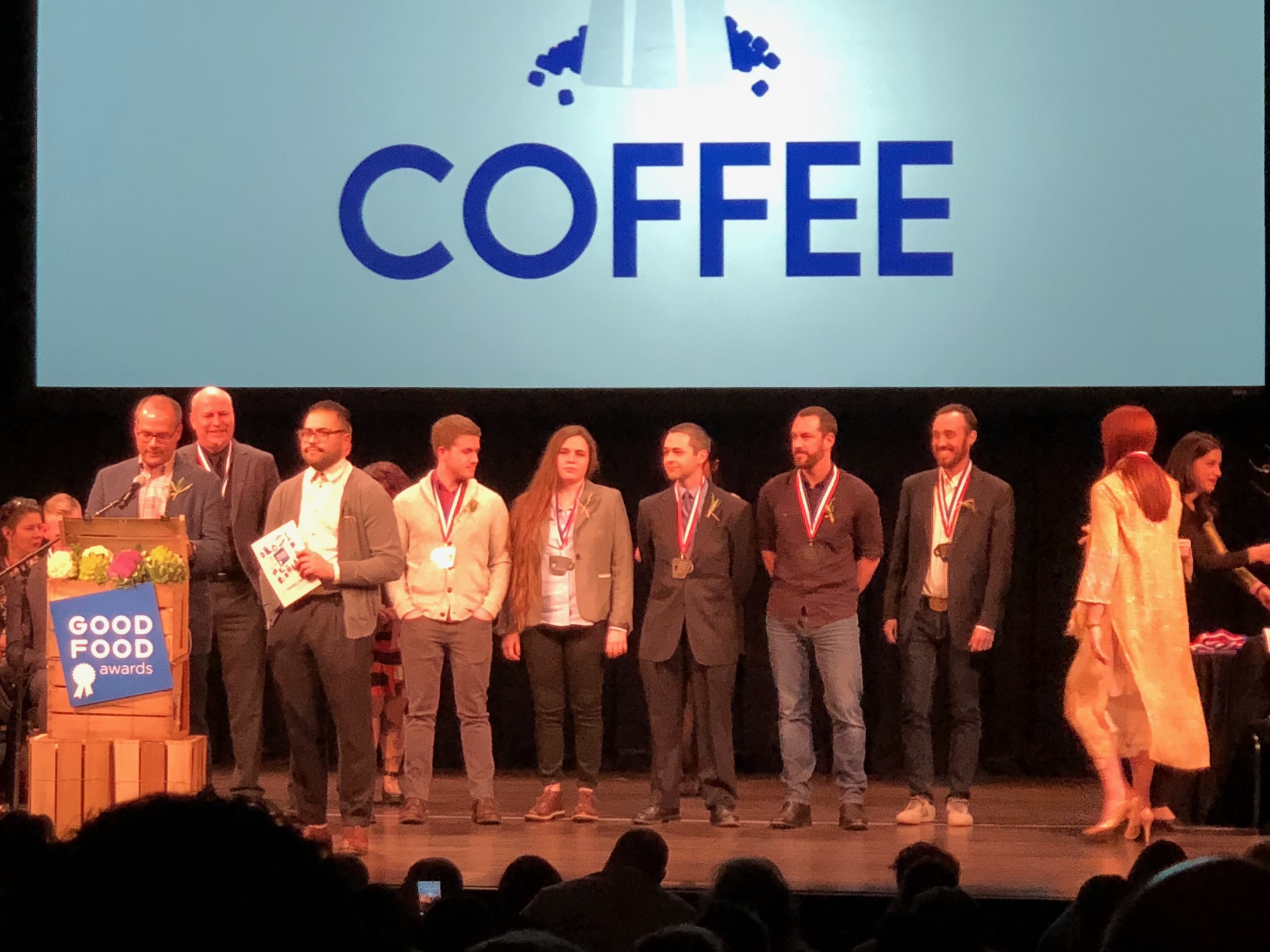
We are one of 15 coffee roasters that won the national 2018 Good Food Awards! Our winning single origin is the Ethiopia Guji, Natural Process from Kayon Mountain Farm. This coffee was chosen out of 2000+ entries that the GFA judges received. We knew we loved our Ethiopia Guji, but … wow, to say we are honored is an understatement.





by Marta Sprague
Yoohoo! We are still pinching ourselves!
We are one of 15 coffee roasters that won the national 2018 Good Food Awards! Our winning single origin is the Ethiopia Guji, Natural Process from Kayon Mountain Farm. This coffee was chosen out of 2000+ entries that the GFA judges received. We knew we loved our Ethiopia Guji, but … wow, to say we are honored is an understatement.
What are the Good Food Awards and how do they choose the winners of the coffee category, you ask?
From their website :
The winners of the Good Food Award for coffee will be distinguished by exemplary flavor – sweet, clean, well developed body, balanced acidity and phenomenal aromatics. To qualify for entry, roasters and coffee farmers must emphasize fairness and transparency from seed to cup. Acknowledging the difficulties of verifying farm-level sustainability efforts across continents, the Good Food Foundation again turns to third-party certification bodies for assistance in identifying beans eligible for consideration.
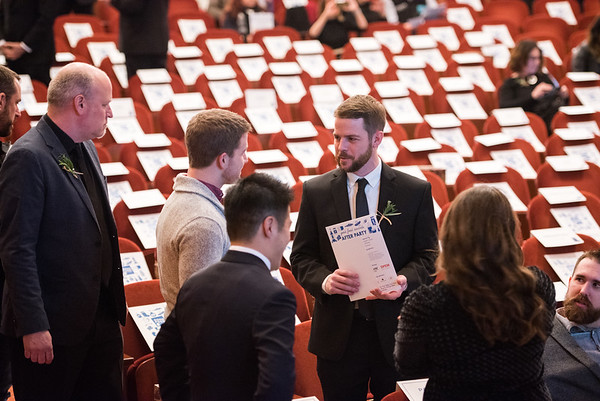
This meant a trip to San Francisco for Kevin and me to attend the ceremony at the Herbst Theatre on Jan. 18. The awards were presented by Alice Waters and Madhur Jaffrey (I have both Alice’s and Madhur's cookbooks, so I was extra stoked). The program was a celebration of quality and sustainability in food and beverage production. Several winners gave inspiring speeches about their personal histories and business philosophies. The after-party was held at Airbnb’s modern and eclectic headquarters where a delicious spread of winning products consisting of charcuterie, cheeses, chocolates, fish, honeys, elixirs, beers, coffees (including our Ethiopia Guji!) and more were served. It was a delicious cornucopia of the nation’s top producers and their winning products. Needless to say we ended the evening with our stomachs and our hearts feeling full. Kevin enjoyed meeting other coffee roasters at the event, including the roasters at Blueprint Coffee and JBC Coffee Roasters, by whom he was seated. Here’s a shout out to two other Texas companies that won: Strange Land Brewery and Lox, Box, and Barrel, Celtic Seafare.
An interesting item of note regarding the awards … all 15 winning coffees were from Ethiopia. As Ed Alagozian, of Pachamama Coffee Cooperative so accurately stated, “The real winners of the Good Food Awards are the coffee farmers in Ethiopia."
Of course, while in San Francisco you partake of all of the food and coffee! Some favorite stops this trip were Andytown Coffee Roasters, Sightless Coffee, Ritual Coffee Roasters, Contraband Coffee Flywheel Coffee Roasters, Foreign Cinema, Plow, La Ciccia, Yuzuki, Royal Cuckoo, the Japanese Tea Garden and a beautiful afternoon exploring Golden Gate Park.
We are still riding on a mental high from the award and what it means to us. As a company that puts an emphasis on how we can continually strive to do better locally as community members and globally with our sourcing decisions, the acknowledgement is both an honor and a validation. We look forward to giving it another shot next year!