
3 fun ways to brew coffee at home
We’re a few weeks into staying home for social distancing, so you’ve probably already started an herb garden, organized your garage, become a championship-level puzzler, and gotten pretty decent at the acoustic guitar. What else is there to do? Why not try some new coffee brewing methods with the equipment you probably already have in the house?
We’re a few weeks into staying home to flatten the curve, so you’ve probably already started an herb garden, organized your garage, become a championship-level puzzler, and gotten pretty decent at the acoustic guitar. What else is there to do? Why not try some new coffee brewing methods with the equipment you probably already have in the house?
Try these outside-the-box home brewing methods to spice up your coffee experience!
Aeropresso
If you have an Aeropress you already know how versatile the handy brewer is. Looking at Aeropress recipes is like counting Tiger King memes: there are just too many good ones to keep track of.
One of our favorites is the Aeropresso. It mimics the taste, aroma, and mouthfeel of espresso (especially if you have a metal filter,) but without having to buy an expensive espresso machine. To make this you’ll need 20 grams of finely ground coffee, water warmed to 200 degrees, and your Aeropress placed in the standard position - meaning cap down, placed above a mug, with the plunger standing by.
Start by rinsing your filter and attaching it to the brewer before adding your coffee. Pour in 45 grams of water and stir vigorously for 30 seconds. At 30 seconds place the plunger at the top of the brewer and let it rest for 45 seconds. Press the plunger down quickly (it should take about 5 seconds) and enjoy your espresso!
If you’re interested in seeing what else your Aeropress can do, check out our livestream Aeropress class!
Coffee Pot Pour Over
Most people think you need to buy a lot of expensive equipment to make a great pour over. But the truth is if you have a kettle and a home brewer like a Mr. Coffee, you can already have everything you need. Begin with 30 grams of coffee ground slightly more coarse than what you would typically do for a pour over. We like a coarse kosher salt normally, so look for something a little bigger than that.
Heat your water to 205 degrees, or bring it to a boil and let it cool for about a minute if you don’t have a kettle with a thermometer. Add the ground coffee, and remove the glass carafe underneath. Bloom the coffee by pouring just enough to get everything wet - around 60 grams. Stir gently to remove any clumps or dry spots. Re-insert the carafe, allowing the brew basket to begin draining. Then pour on the remaining 450 grams of water in a circular motion. Let the coffee draw down from the basket and enjoy!
This unconventional method makes a delicious, clean cup of coffee.
French Press Cold Brew
Home cold brewing equipment is a dime a dozen, and most of it is unnecessary if you have a French Press at home. The metal plunger on your press makes it a perfect tool for a full-bodied, syrupy cold brew. Grind 100 grams coffee at its coarsest setting and add to your press. Pour 500 grams of room temperature water onto the grounds and swirl for 30 seconds to wet the grounds and begin off-gassing. Let it sit for 5 minutes before swirling again. Cover your press (you can use the lid of your French Press, but don’t press down on the plunger,) and let it sit at room temperature for 15 hours.
Once you’ve steeped your coffee, gently stir the grounds before pressing down on the plunger. Pour through a wetted coffee filter if you prefer a cold brew with slightly less body. Otherwise, skip the filter and pour your coffee into a clean container. This could take a few minutes but trust us, you’ll want every drop. The resulting liquid is a cold brew concentrate. Store it in the refrigerator in air-tight storage, and dilute with cold, filtered water to taste. We prefer a 1:1.5 ratio of concentrate to water for a bold, smooth, and chocolaty coffee.
Give these a try, and tell us your favorite way to make coffee in an unconventional way!
Raising the bar on coffee education
We first started offering classes at Noble Coyote Coffee in December of 2016. The first class centered around brewing on a Chemex with a little discussion about grind size and how that affects the outcome of your coffee. I think 6 people attended, and 4 of those were family or friends of the staff here. It was a humble start, but that was the whole point: get started.

By Kyle Simmons
We first started offering classes at Noble Coyote Coffee in December of 2016. The first class centered around brewing on a Chemex with a little discussion about grind size and how that affects the outcome of your coffee. I think 6 people attended, and 4 of those were family or friends of the staff here. It was a humble start, but that was the whole point: get started.
And now here we are more than a year and-a-half later. We hold cuppings on every first Saturday of the month and brew classes every third Saturday (with few exceptions). Our cuppings average more than 20 people, sometimes reaching over 30. At the most recent brew class about the AeroPress, we had about 15 people in attendance. This is just to say that attendance has been good – in some cases too good – and we feel confident that coffee education is something people have a real interest in. Heck, D Magazine even made up an award for us.
We are immensely satisfied with the success of our education program so far. With that in mind, we continue to try new things that we hope will make the experience even better for our student customers.
1. Classes Now Cost $10 (Beginning July 21)
Up to now, we've been offering our public cuppings and brew classes for free. I am a big believer that education should be accessible to everyone. And having put these classes together over the past year and a half, I'm also a believer in having the resources to grow. The revenue from our classes will help us develop more and better classes, plain and simple. It will allow us to purchase materials and equipment. It will also help offset staffing costs. My hope is that our student customers will see this as an investment in a program that really does deliver something of value that, frankly, will cost you a lot more somewhere else.
2. Interactive Brew Classes
The goal of our brew classes has been to show students how to brew better coffee. This has always involved demonstrations whereby I brew some coffee and explain what I'm doing, and the students watch me. This falls short of the goal to me. If you wanted to watch someone brew a pourover, you could buy one at the bar, and you'd get a full cup of coffee for your trouble! You came to learn how, so I want you to get some hands-on experience. From here on, the major objectives of our brew classes will be experience driven. This means at the least you will get to do some sensory analysis (smelling and tasting), and my goal whenever possible is for students to do the brewing.
3. Class Sizes Capped
Part of the value of our classes is getting to interact with everyone else in the room. We want you to ask questions, to compare notes with your classmates, and to feel like you can be heard. With 30 people in the room and 1 instructor, people tend to clam up. Plus, it just gets hot and crowded and that's not fun. By capping our classes we can ensure that students are provided a learning environment conducive to thoughtful discussion. It will also help with our second point of making the classes more interactive. We realize that this may mean classes fill up and some people are unable to join on a particular date. Trust me, if this happens enough, we will add more class dates. Until that time, we advise everyone to register for classes early.
4. More Better Stuff
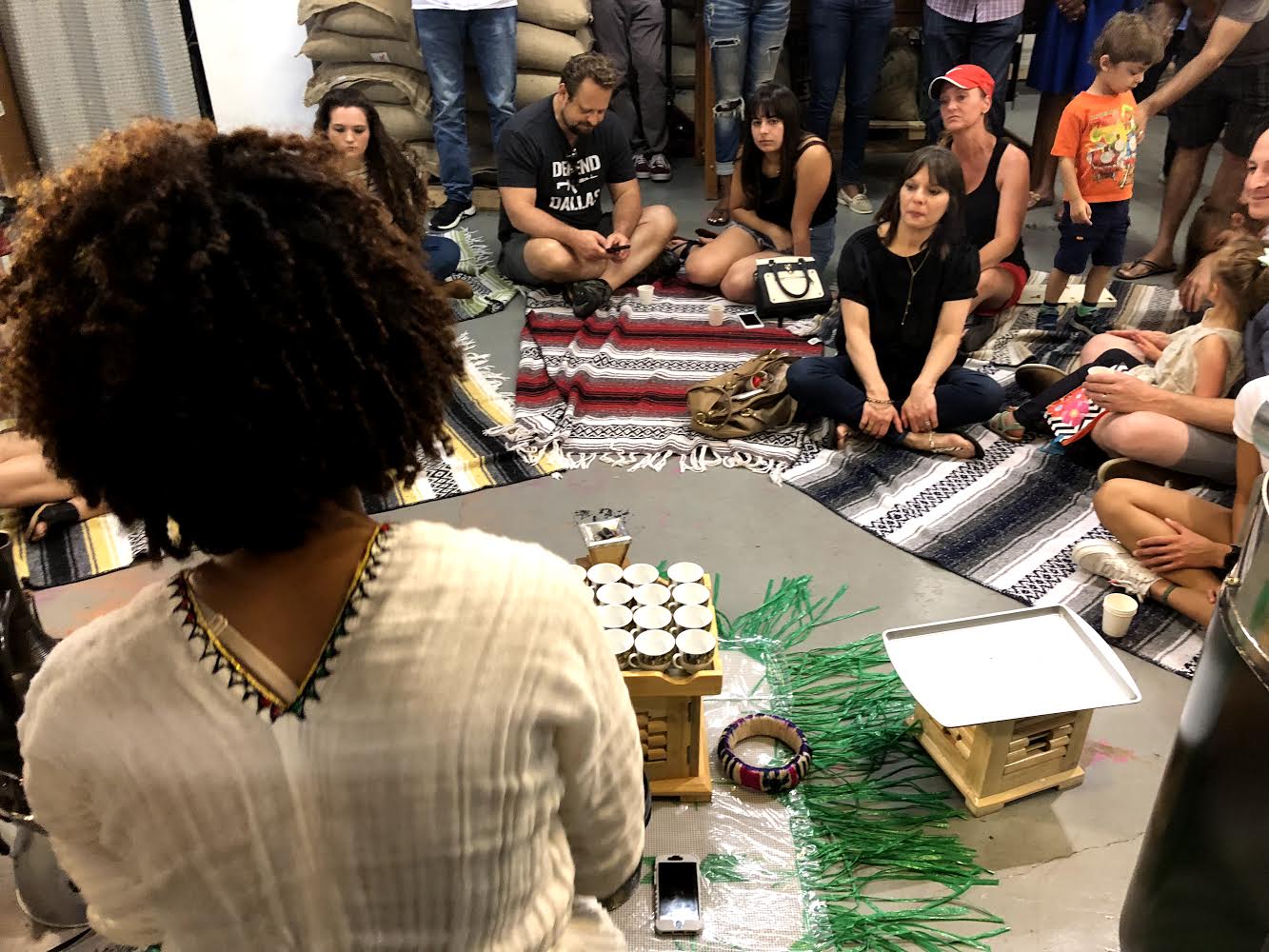
In addition to our regularly scheduled cuppings and brew classes, we have begun throwing in some other odd events here and there. In June we hosted a traditional Ethiopian coffee ceremony that drew a big crowd and was so fun to put on. We also recently hosted a palate training event by the Dallas Coffee Gxls, a woman-run organization here in Dallas with a mission of empowering femme-identifying folx in the local coffee community. These events, run by individuals adjacent to Noble Coyote, were very rewarding for us as a company because they brought in fresh perspectives and people. Also, after being in front of the class every other week, it's nice to actually participate in something as a student sometimes! We have also begun developing a secondary line of classes that, as of now, don't have regularly planned dates. We call these master classes because they are designed to be deep dives into a particular subject. For example, our first master class covered water chemistry as it pertains to brewing coffee, and students finished the class by formulating their own brew water. In July, we will have a master class that deconstructs how we taste with the goal of preparing students to practice tasting as a skill. Master classes are generally more expensive than our regularly scheduled programming, but they allow students to take a real big bite of the subject matter, and they will walk away knowing how to do something.
I have enjoyed immensely seeing this program develop to where it is today. It has been a pleasure to see some of you come to multiple cuppings and classes. And it's always mind blowing to me how many newcomers attend. Just when I think I've become too big of a coffee nerd, there's a whole room full of people wanting to learn how to taste better or which brew method is going to make their morning cup have a fuller body or whether pourovers really do taste better (they do when you make them with love). It's inspiring to be in such good company. I really look forward to the future of Noble Coyote Coffee Education.

Lab Report: Ethiopian Coffee Ceremony
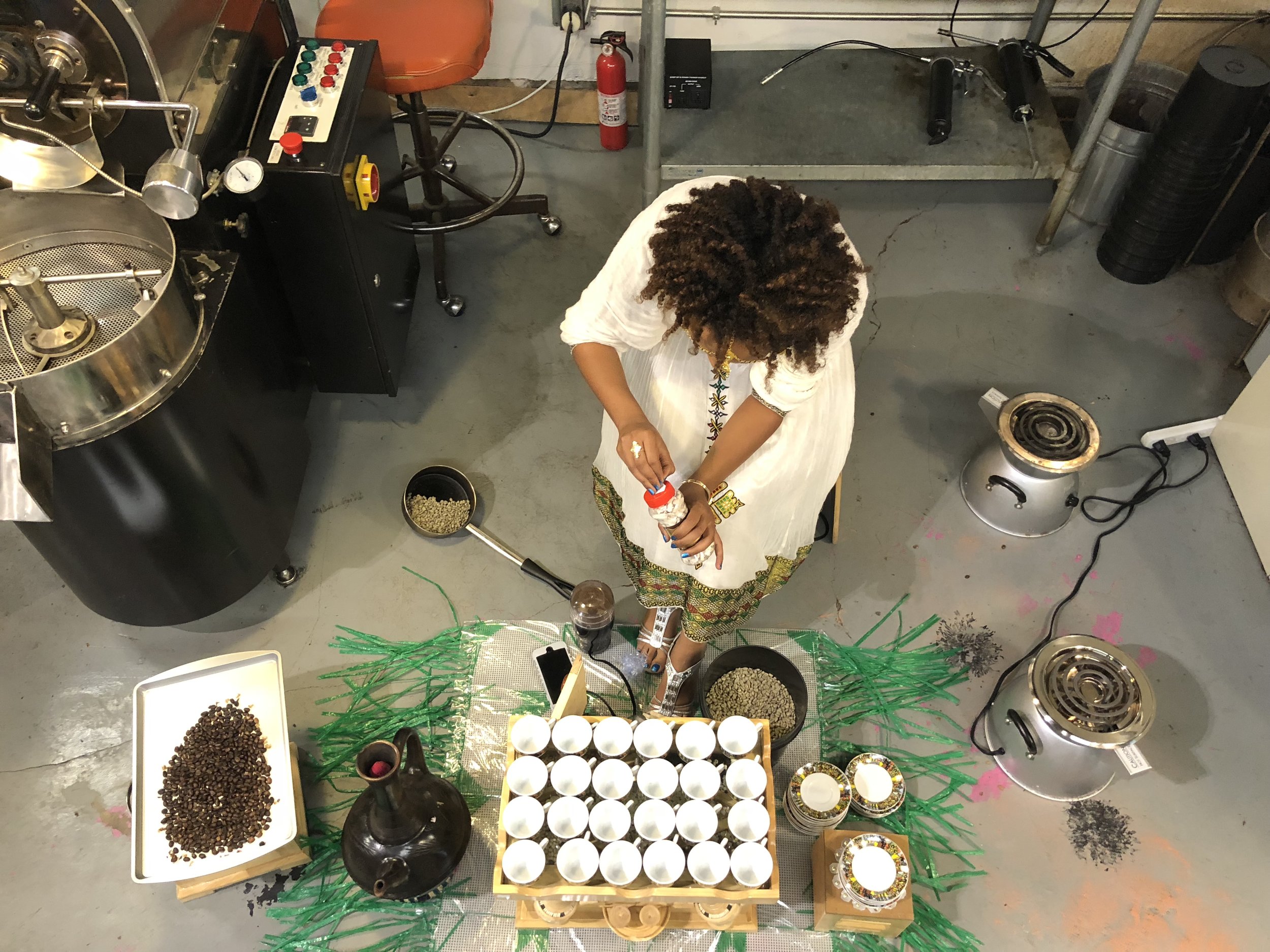
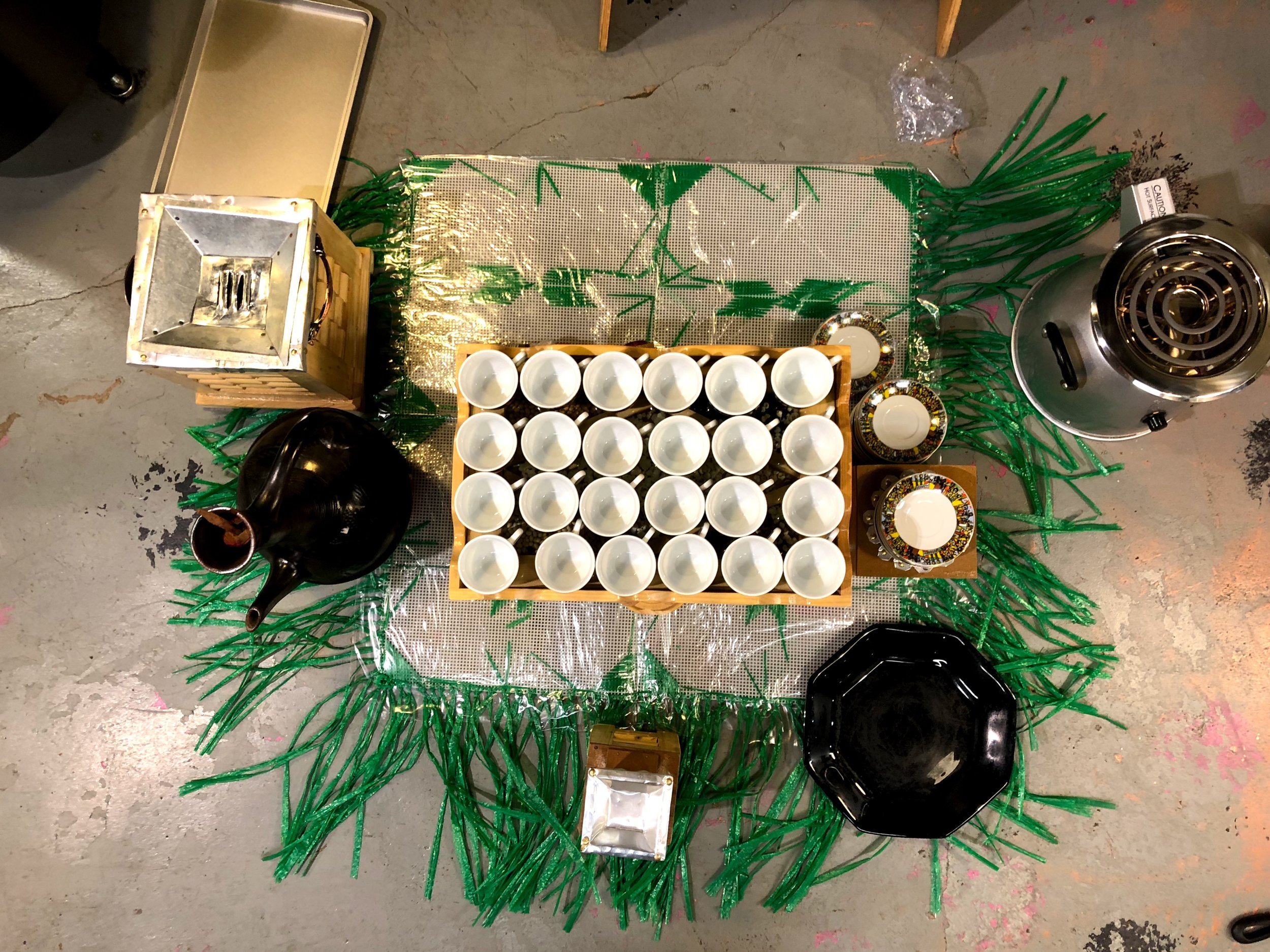
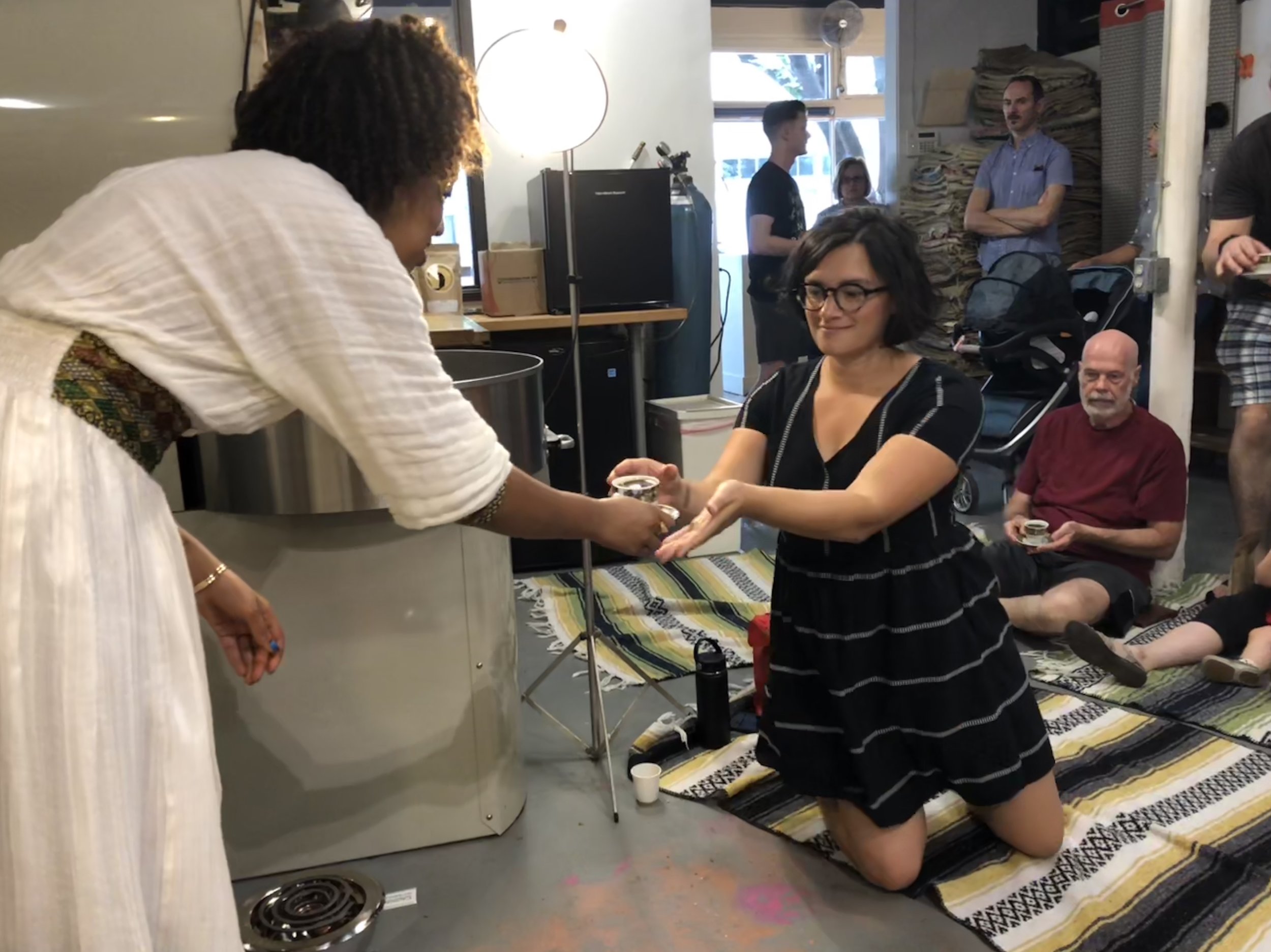
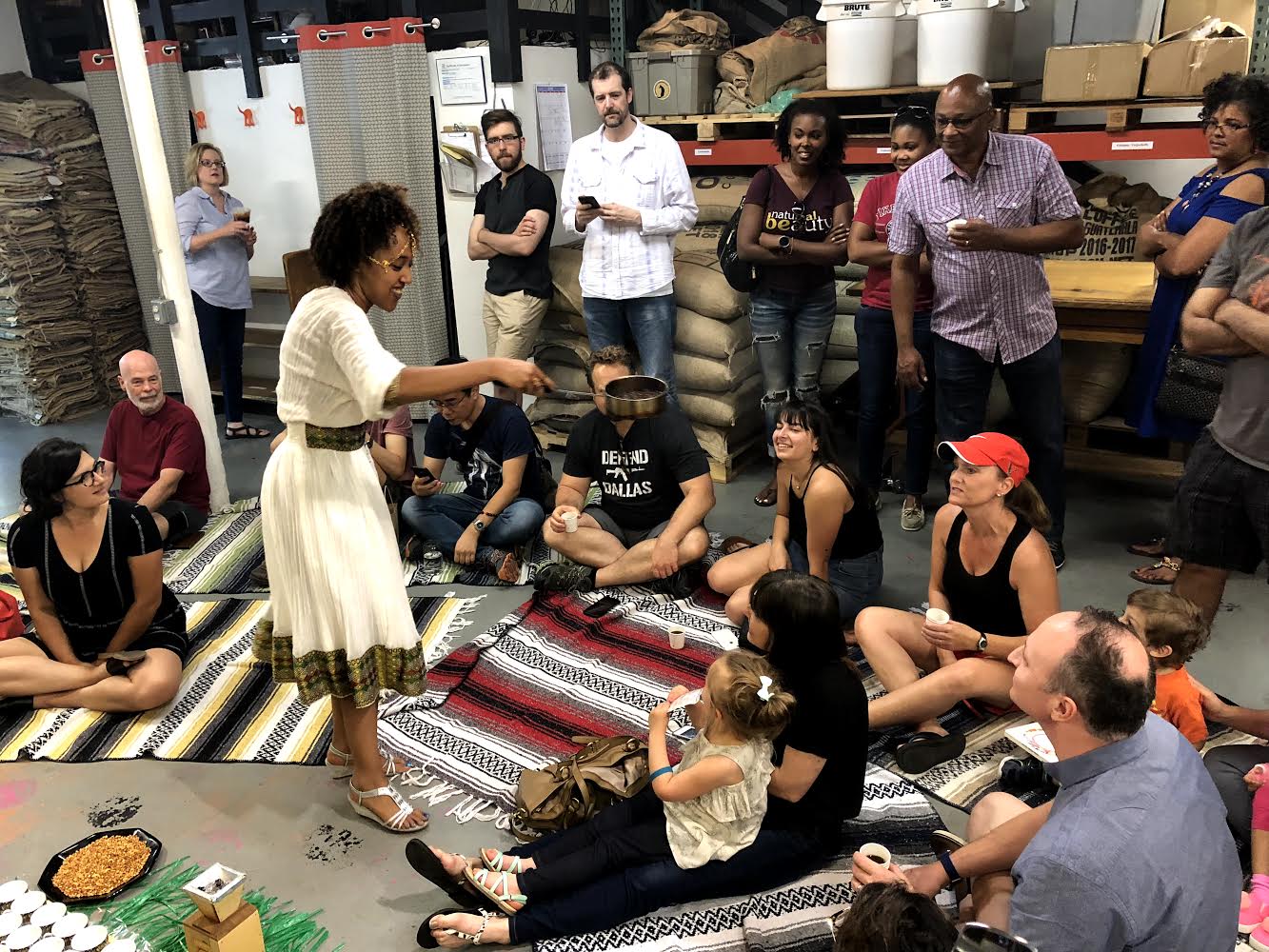
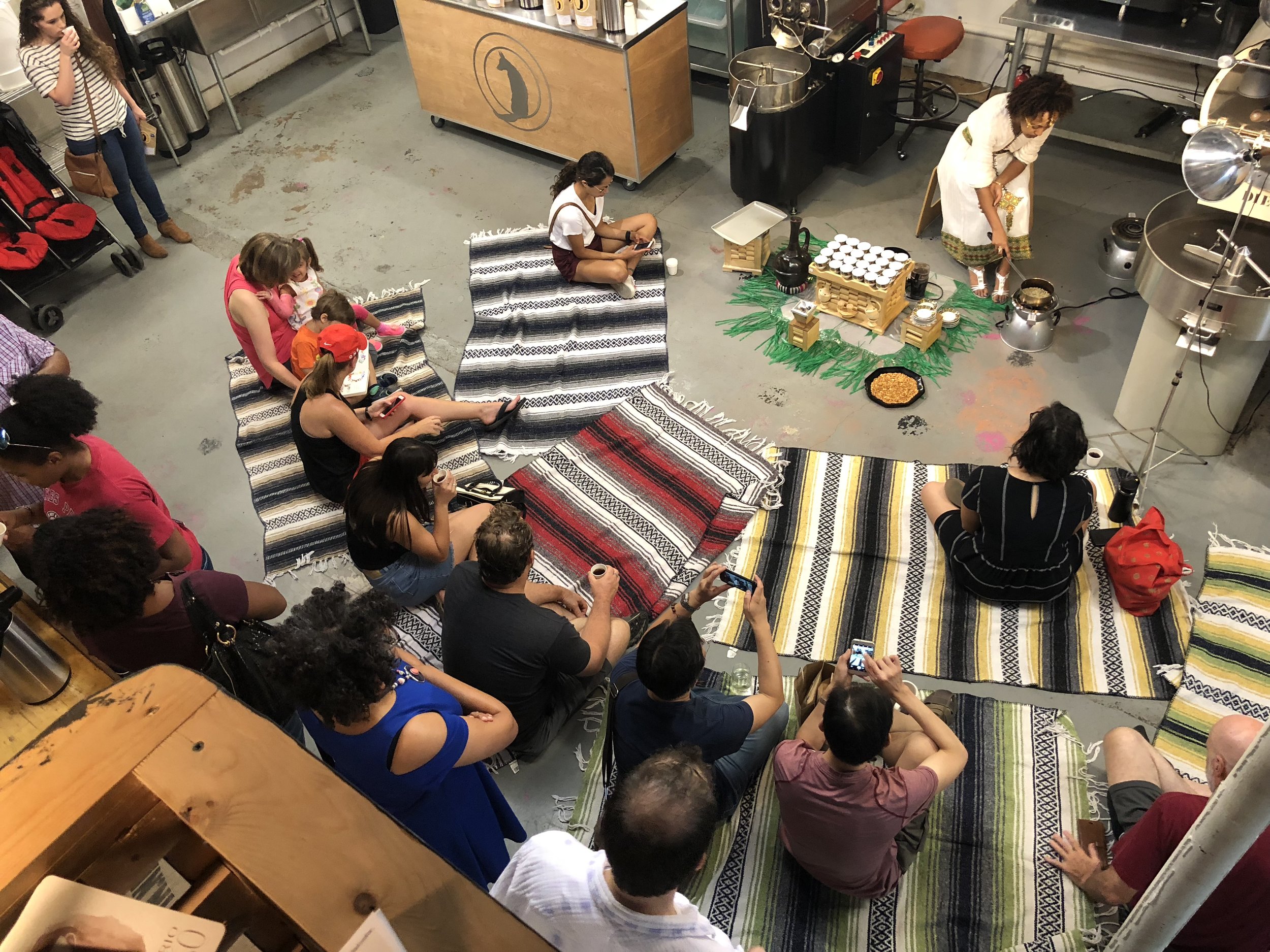
When Rediet Begashaw arrived at the shop, I knew I was in for something different. She started by placing decorative ceramic cups and saucers, an electric stovetop, and a special pitcher called a jebena on the ground. While the ceremony that followed wasn’t formal, it was completely eye opening when she said the centuries-old spectacle takes place nearly every day.
By Steve Dickerson
Most of the time, when I want coffee in the morning, it’s a pretty easy task. Grind the beans, boil the water, combine the beans and the water, wait, filter, and enjoy.
So when I learned we (Noble Coyote Coffee Roasters) planned an Ethiopian Coffee Ceremony at the roastery I wasn’t sure what to expect. Ceremonies tend to be pretty formal affairs and that is not at all what it looks like while I force myself to make coffee after emerging from my bed. How long is a ceremony? After all, when I make coffee I want the process done as quickly as possible.
When Rediet Begashaw arrived at the shop, I knew I was in for something different. She started by placing decorative ceramic cups and saucers, an electric stovetop, and a special pitcher called a jebena on the ground. While the ceremony that followed wasn’t formal, it was completely eye opening when she said the centuries-old spectacle takes place nearly every day.
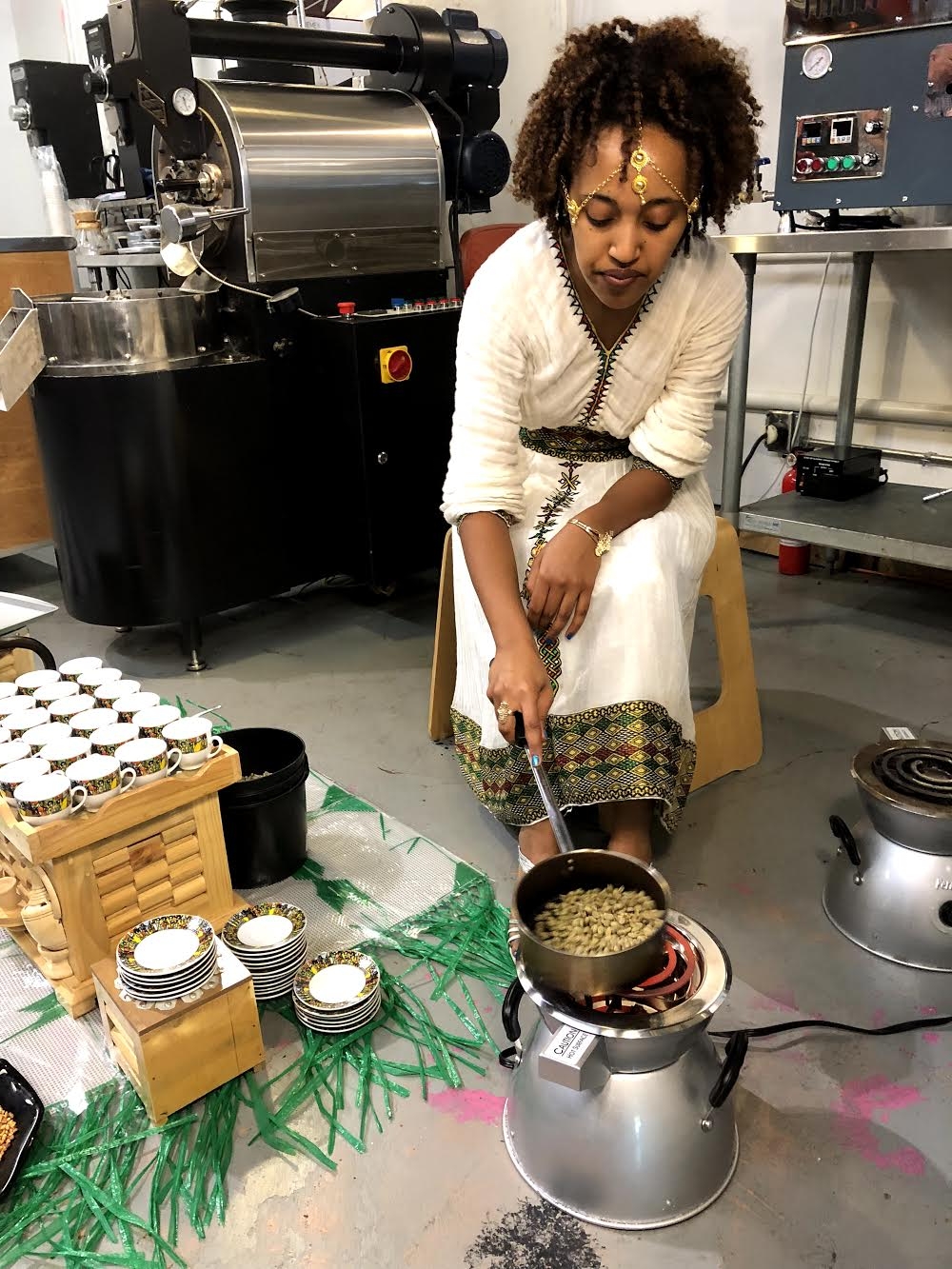
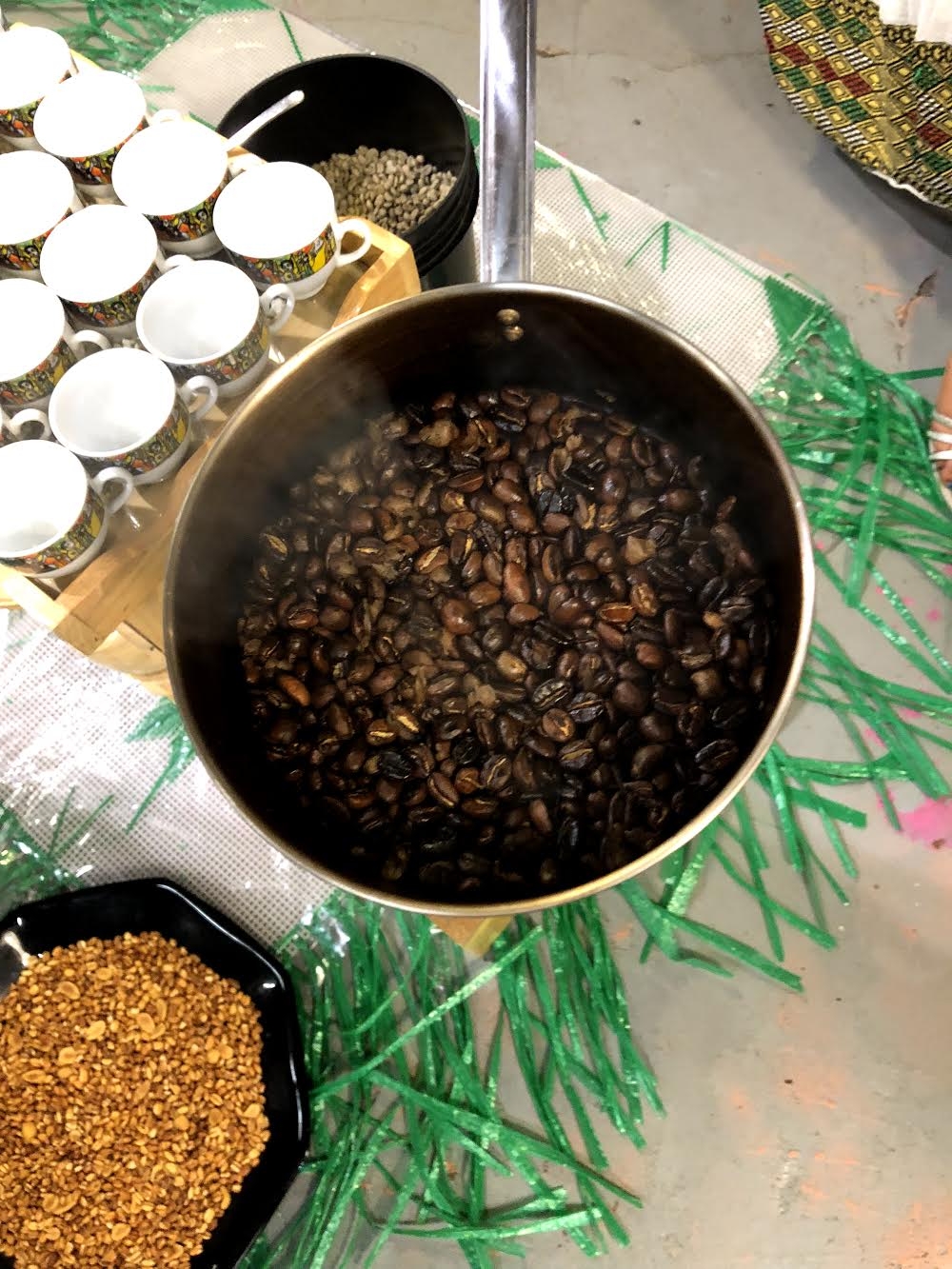
She started by lighting incense, and then poured a handful of beans into a pot with a long handle and began roasting them over a stovetop roaster, shaking it every now and then like you would while making popcorn on the stovetop. To keep the beans moving, she said, ensures a more even roast.
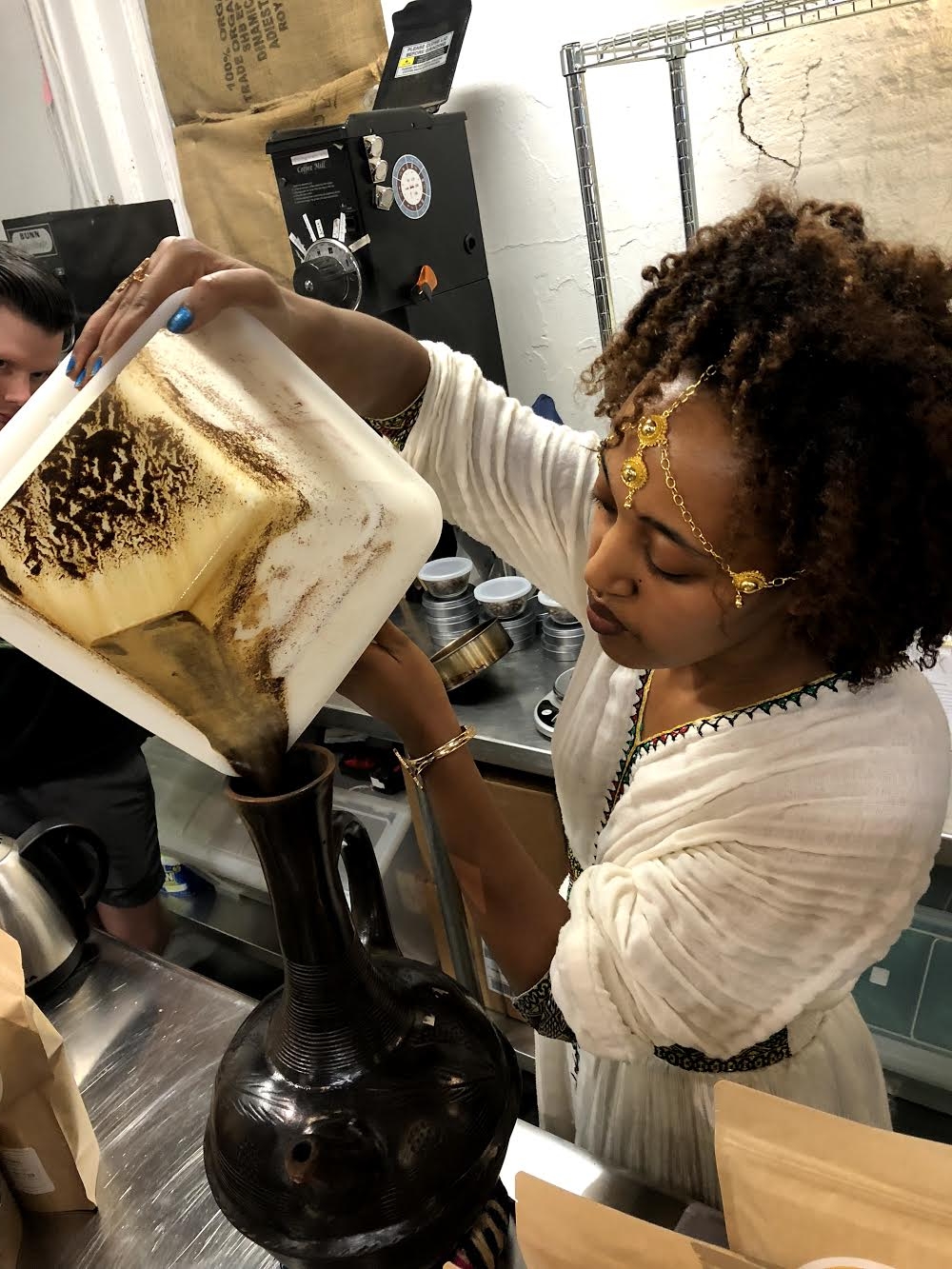
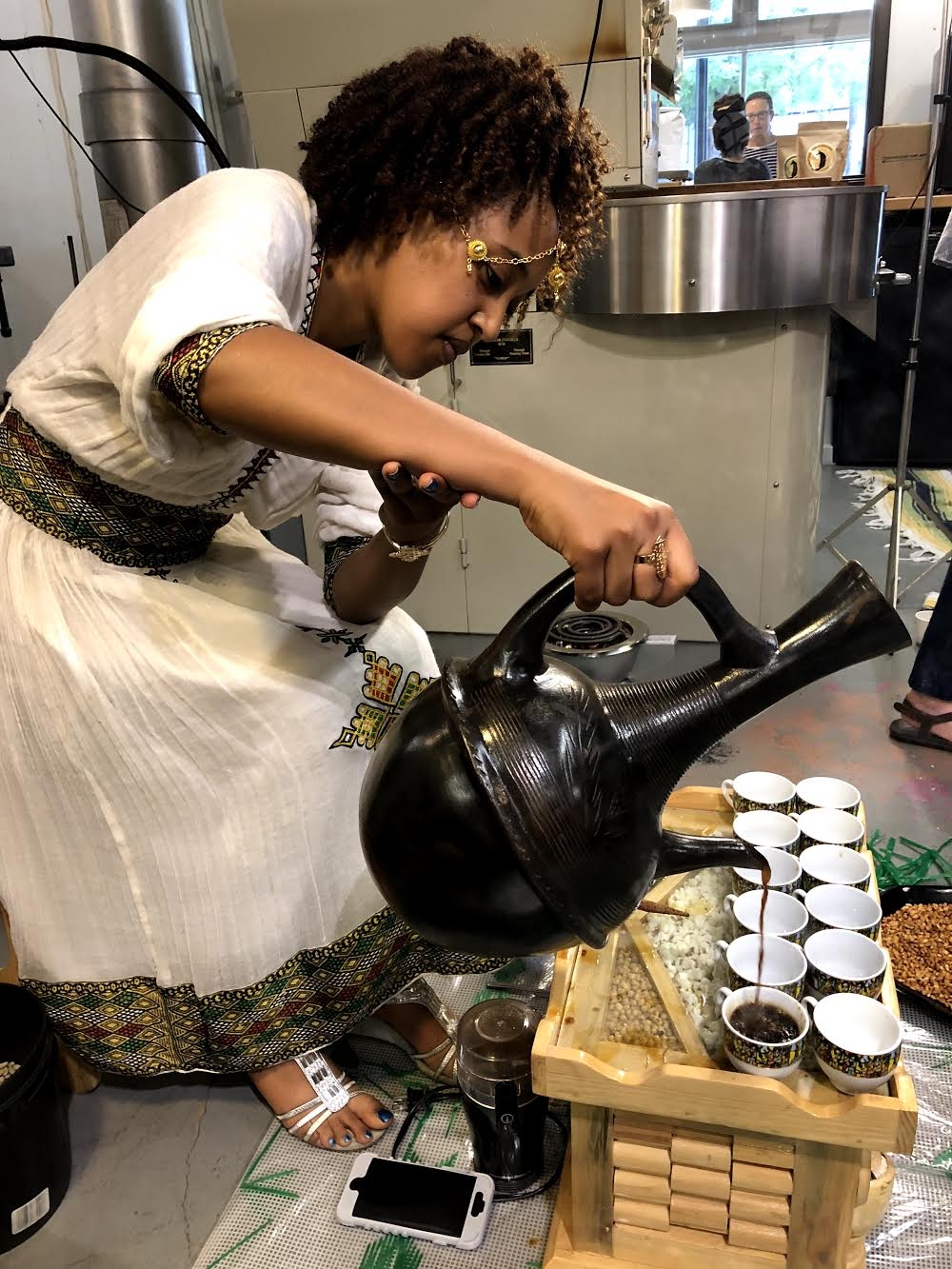
Once the beans were roasted to a dark finish, Rediet ground the beans (traditionally done with a mortar and pestle, we elected for a more modern approach) and poured water over them allowing them to steep. She then transferred the coffee into the jebena to steep a second time. This allowed the beans to settle into the bottom of the clay pitcher before pouring.
The conventional wisdom around coffee is that it needs to rest after roasting. This time allows the beans to naturally offgas C02, permitting water to penetrate the bean when it’s time to actually make coffee. So I was a little apprehensive when Rediet handed me a cup of coffee that was literally as fresh as possible, and roasted darker than I would normally like. But the coffee she served me was terrific. Rich and spiced and completely satisfying.
I’m really glad we were able to bring a new perspective to the shop. So often we forget that coffee is a global product, and one with roots in many different cultures and traditions. I’m hopeful that we can bring in even more perspectives as we continue to teach our customers and ourselves about coffee.

Field Trip : Coffee Expo
The Specialty Coffee Association holds an expo annually to allow coffee professionals and enthusiasts to get together, learn from each other, see new products, and drink lots of coffee. This year, the expo was held in Seattle, so Kevin and I got on a plane bound for America's coffee Mecca.




by Kyle Simmons
The Specialty Coffee Association holds an expo annually to allow coffee professionals and enthusiasts to get together, learn from each other, see new products, and drink lots of coffee. This year, the expo was held in Seattle, so Kevin and I got on a plane bound for America's coffee Mecca.
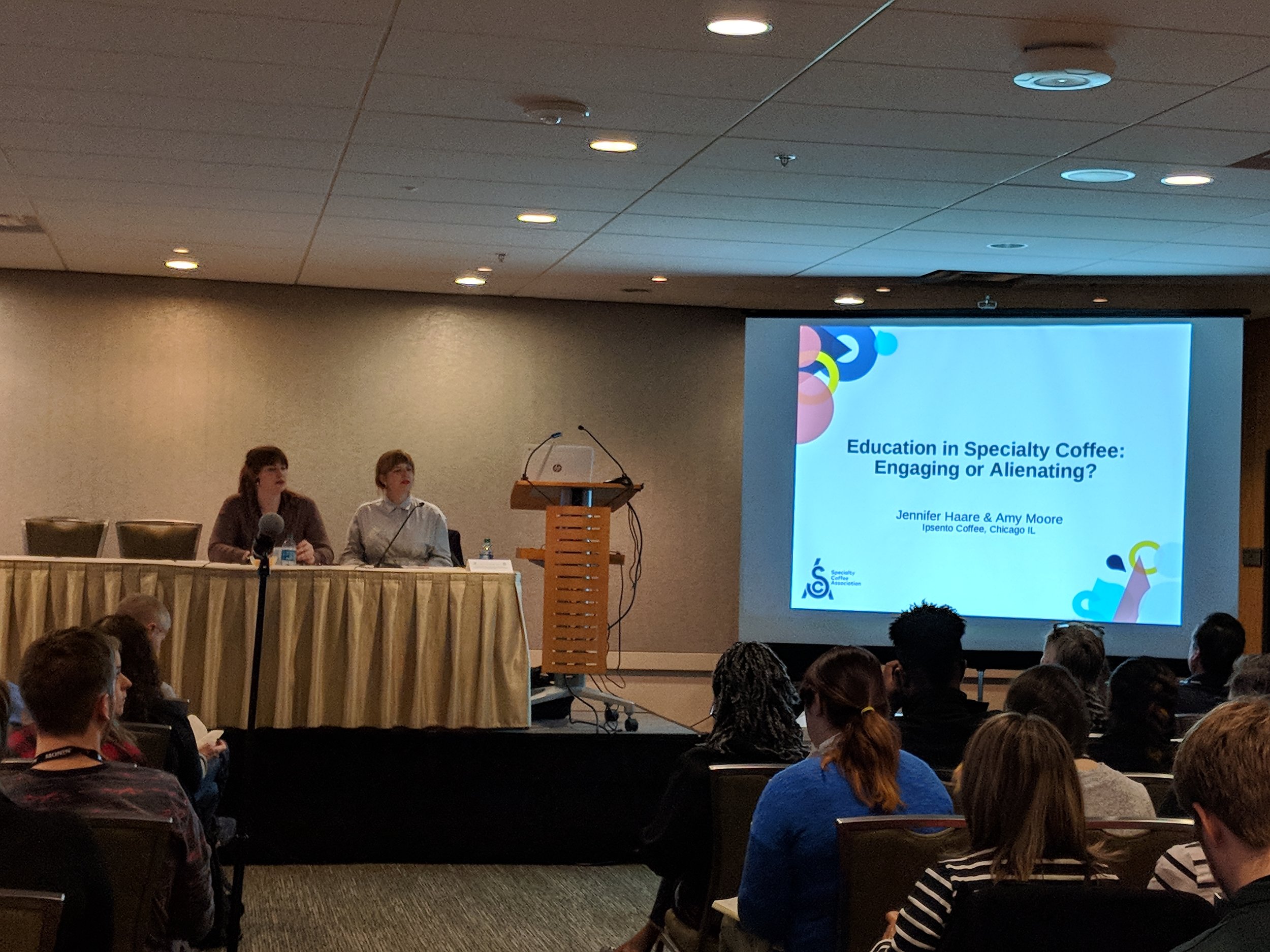
One of my specific goals for this trip was to get an idea of how other coffee companies are conducting their education programs. Noble Coyote began offering public cuppings and brew classes in January of 2017. Our class sizes have grown from 3-5 people to over 20 in the past year. I wanted to learn how to grow our education program by attending lectures given by some experienced coffee educators. Jennifer Haare and Amy Moore of Ipsento Coffee in Chicago gave an excellent lecture about making coffee education engaging and fun. I also attended a panel discussion about mentorship within the coffee industry. The panel discussed the impact mentorship can have on baristas' careers. I look forward to applying what I learned in these lectures to the education program at Noble Coyote. I think everyone will be excited to see us continue offering fun, accessible, and interesting classes.
Of course no coffee trip would be complete without visiting some local shops. In Seattle, it's hard to not get coffee. We did see the Starbucks Reserve roastery, and I have to say that it is a monument to coffee. It's a really cool place that seems to be packed with tourists every hour it's open. Right down the street is Victrola Coffee where I got an impeccable cappuccino: the foam was like marshmallow fluff yet somehow not too dry? It reminded me I need to practice my steaming skills. At a shop called Ghost Note, owner Christos is pulling some amazing shots from roasters across the country. Ghost Note only offers espresso – no pour overs or drip – and it is done very well. Before we left Seattle, we had to hit up Anchorhead. I got really caffeinated before our flight with a delicious shot of Yirgacheffe natural followed by a pretty fruit forward Guatemalan pour over.
Overall, it was a fun trip full of learning and good coffee. It's my hope that all of you can reap the benefits of our growth. If you're going to Seattle and need a coffee recommendation, be sure to ask us!